


Hospitality
Hospitality Conversion Gamification
The Octalysis Group created a new industry standard for hospitality and travel booking platforms.
33.4%Increase in gross bookings
The Octalysis Group is the world’s leading consultancy in behavioral design and gamification. We work with heads of digital banking, cards and loyalty, sales and distribution, and insurance product teams. Together with your team we agree which business metric has to move, such as card spend, loan approvals, sales participation or claims. Then we design an experience that makes customers or employees want to take the actions behind it.
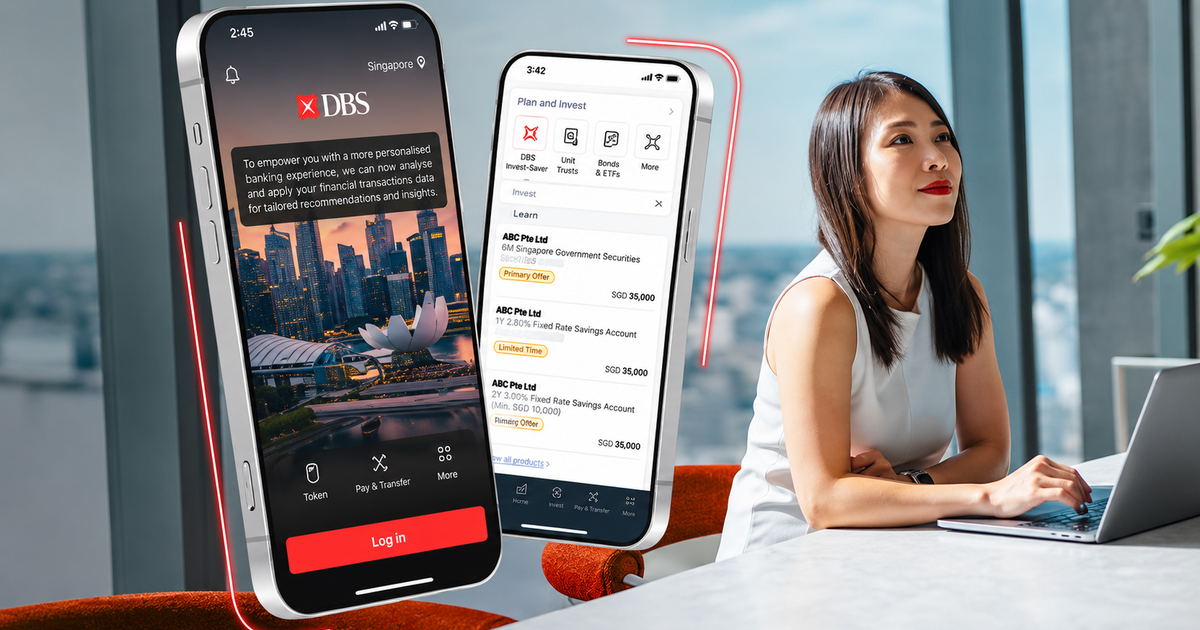
For DBS Bank, credit card spend rose 30% and loan approvals 20% after one year, with 30% of our design implemented. At CAIXA Econômica Federal, a bank with about 83,000 employees in 4,500 branches, participation in sales initiatives rose from 10% to 92% and net income grew 48%. With VÍS, one of Iceland’s leading insurers, over 60% of drivers improved their driving scores within three months. All three were designed with the Octalysis Framework, created by our co-founder Yu-kai Chou.
Most people treat financial activities as an obligation. They open the app to check a balance or pay a bill, and then they leave. The app can be secure, clear and fast, and the savings goals, card features and loan products inside it still go unused. A product can be logical and intuitive without being engaging.
Insurance and pensions are harder still, because their value lies far in the future. A premium or a pension contribution is paid today, and the benefit arrives years later or, with luck, never has to.
The usual answer is a reward catalog: cashback, points and a tier. These have a role. A reward can help someone get started, and a badge can recognize a real achievement. But customers who repeat the same action for more points find that it gets stale, and a competitor can match the reward. This is the position DBS was in when it wanted a banking experience that could compete with the new mobile fintech banks on engagement.
Inside the bank the pattern is the same. Before our program at CAIXA, KPI emails and cash bonuses were being ignored, and about 10% of employees took part in sales initiatives.
So we look at the motivation around each financial action: what the customer gets back from it, which choices it opens up, who else is involved and what there is to discover.
Gamification in banking and insurance is the use of motivational design learned from games to make customers, employees and policyholders want to take the financial actions a bank or insurer depends on. It is also called banking gamification, insurance gamification or gamification in financial services. Good gamification designs that motivation into the product itself and does more than add points, badges and leaderboards to an unchanged process.
We learn from games because participation in them is always voluntary. When a game stops being engaging, players leave, so games have had to optimize their design for human motivation. A bank’s customers are just as free to leave.
A financial product does not have to look like a game. Explicit gamification is recognizable as a game, as the collectible puzzle pieces at CAIXA were. Implicit gamification brings the same design into a professional interface, as LinkedIn’s profile completion bar does. We choose according to your audience and your brand, so the experience stays appropriate to a bank or an insurer.
We design what a customer does after logging in. At DBS, financial goal setting reflected each customer’s spending habits and savings targets. Personalized challenges let people compete with friends or track their own benchmarks, and joyful surprises added discovery. Customers who value competition, personal progress or free choice each have a path through the same product.
A card program keeps its customers when it offers more than the same reward collected again. We combine extrinsic incentives with choice, progress and discovery, as set out in our article on using rewards without killing motivation. Our loyalty program design service covers this work in depth.
In a branch network, targets usually arrive as KPI emails and spreadsheets. We design the experience around the people doing the selling, including their relationships with each other. At CAIXA, employees traded collectibles and branches contributed to one shared national goal, so a colleague became someone to cooperate with. Our employee engagement service applies the same thinking to any workforce.
In insurance, engagement can change behavior outside the app. Ökuvísir, the app we helped VÍS design, scores how people drive and rewards safe driving with a lower premium. The driver saves money and the insurer receives fewer claims. Our article on gamification in insurance discusses the role of feedback in this kind of experience.
Long-term products need motivation that works today. Our 2019 analysis of mobile banking showed how shared savings goals let people achieve something together, which managing money alone does not offer. In 2016 we provided initial advisory to the UK pensions department on workplace pension engagement. Our analysis of its Workie campaign found a problem in the social message: showing people who ignored pensions made nonparticipation look normal.
A new customer and a customer of ten years need different things from the same product, so we design for the four Experience Phases of Octalysis.
Discovery is why someone would try the product at all.
Onboarding gives clear guidance and an early achievement, so that people feel capable.
Scaffolding is the regular use. Here the design opens up with more strategic choices, meaningful collaboration and joyful surprises.
Endgame is for your most experienced customers. They need ways to contribute, including helping others and becoming brand ambassadors.
We also decide how the relationship should feel over the years. The Octalysis Framework distinguishes White Hat motivation, which gives people fulfillment and a sense of control, from Black Hat motivation, which creates urgency and pressure. Both have a role. A relationship built on meaningful progress, choice and cooperation has a different character from one that depends on the fear of losing rewards. We select the mix for the audience, the action and the stage of the relationship, and participation stays transparent and voluntary.
We begin with a review of your objectives. Are the business metrics the right ones, in the right order of priority? Which desired actions move them, and who has to take those actions? Almost all of our clients discover at this stage that they were designing for the wrong thing. They revise the expected outcome before anything is built, which is why they implement with more confidence and less risk. The agreed metrics and actions go into the Strategy Dashboard.
Then we look at who your customers or employees are. We define player types from your actual audience and use the 8 Core Drives of the Octalysis Framework to understand what motivates each of them. The Core Drives show which motivations dominate your current experience and which are missing.
You receive a detailed engagement strategy and experience design, worked through to feature detail and screen-level wireframes. Your own team or technology partner implements it inside your existing app, card program or internal platform. The design rests on motivational psychology and behavioral economics, as set out in the scientific foundations of Octalysis. We measure the result against the business metrics agreed at the start.
Our team has designed gamified and behavioral experiences for more than 175 companies, from Fortune 500 firms to startups. Banking and insurance projects are delivered by our expert team of Octalysis specialists, who work from the United States, Latin America, Europe and Asia.
The Octalysis Group was co-founded by Joris Beerda, the world’s leading practitioner in Octalysis and an expert in enterprise gamification, and Yu-kai Chou, the creator of the Octalysis Framework. Both are involved in many of our client projects.
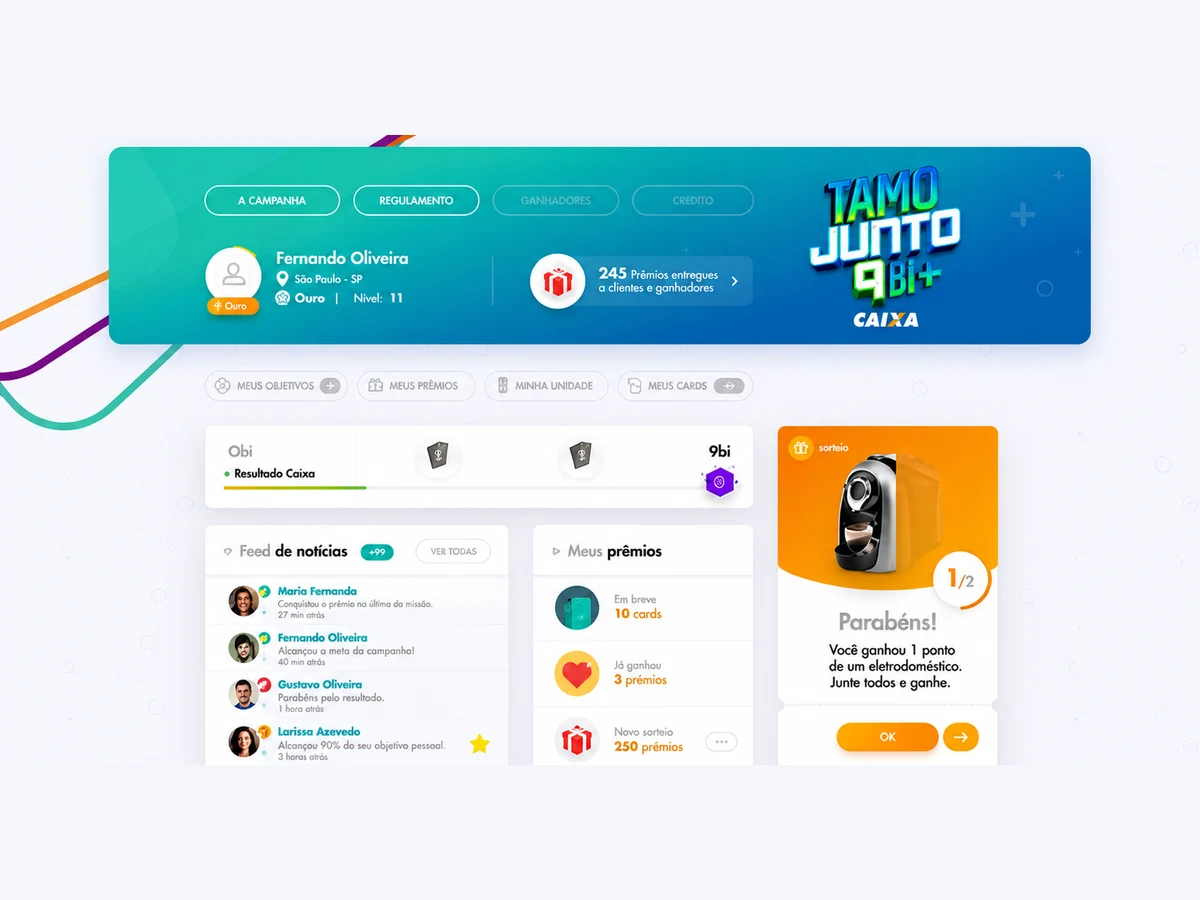
CAIXA Econômica Federal had about 83,000 employees in 4,500 branches, and participation in sales initiatives was around 10%. KPI emails and cash bonuses were being ignored. We designed Tamo Junto 9Bi+ (Together We Reach 9 Billion+). Employees earned digital puzzle pieces by achieving targets and traded them with colleagues to complete sets and unlock rewards, while every branch contributed to one shared goal. Prizes ranged from headphones to trips and cars.
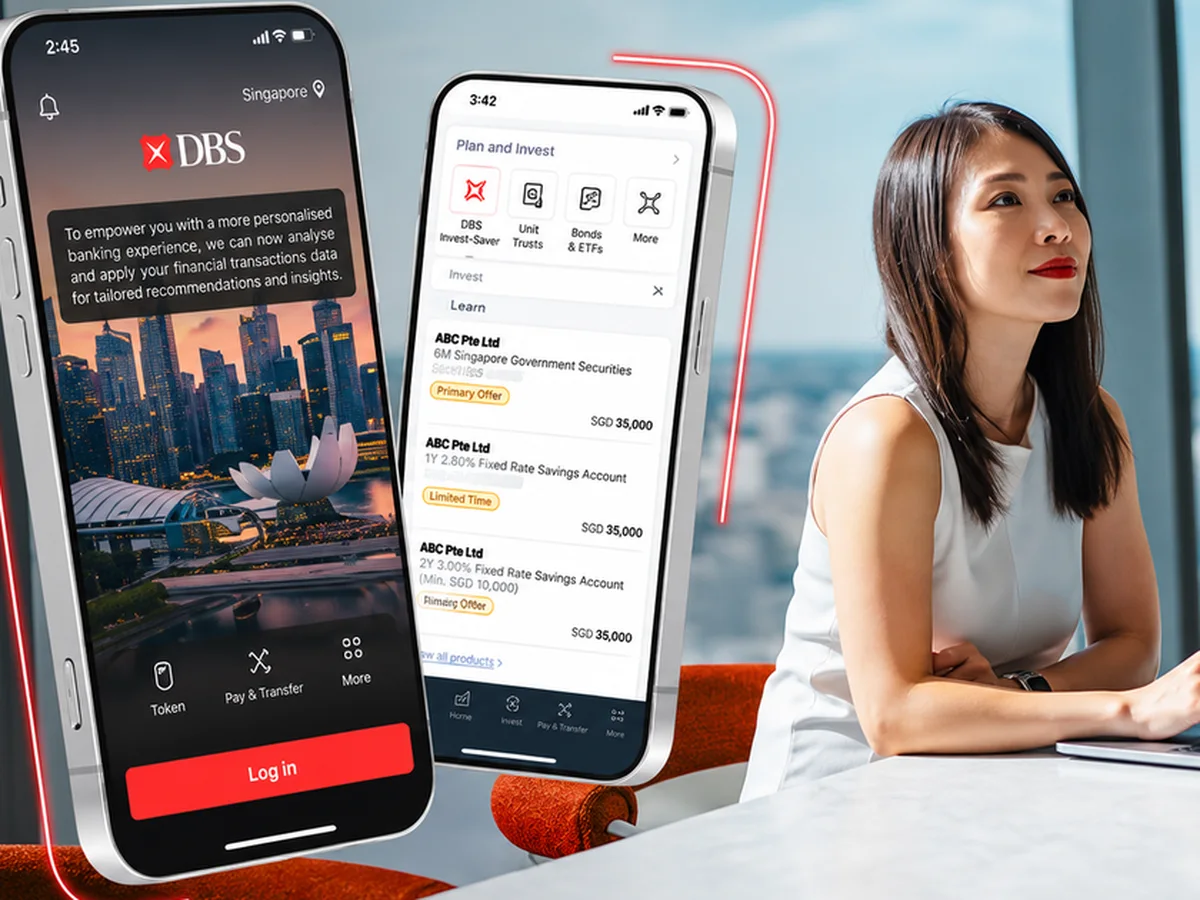
DBS wanted a banking experience that could compete with the new mobile fintech banks on engagement. We worked together on six projects, from credit card program design and loan applications to SME programs. The design gave customers strategic choices tailored to their preferences: financial goals based on their own spending and savings, personalized challenges and joyful surprises.
After one year, with 30% of the design implemented:
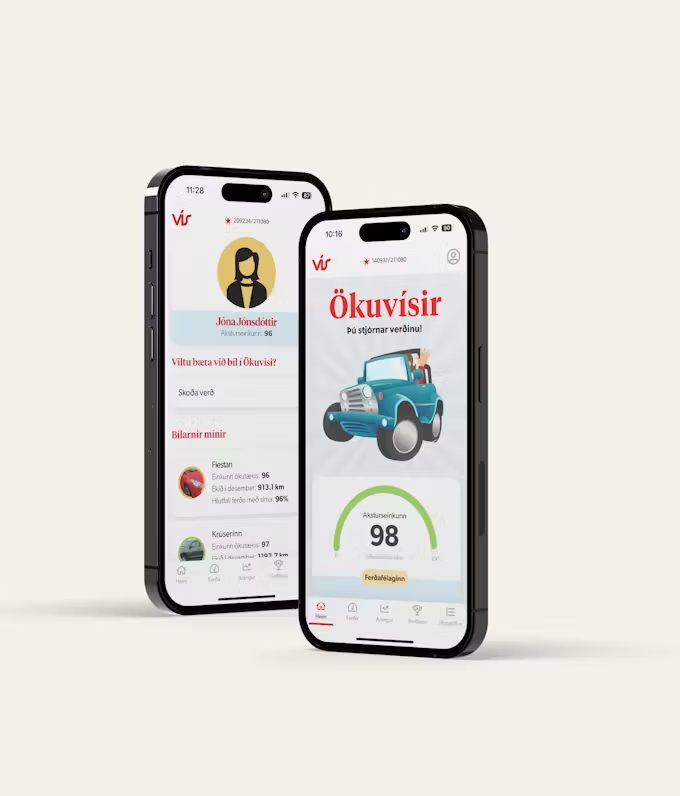
VÍS, one of Iceland’s leading insurers, wanted to encourage safer driving. We helped design Ökuvísir, an app that evaluates speeding, acceleration, braking, swerving and phone use and gives each driver a behavior score. Drivers with high safety scores receive discounts on their insurance premiums, so feedback on driving is tied to a benefit drivers understand.
92%
CAIXA employee participation, up from 10%
+30%
DBS credit card spend after one year
60%+
VÍS drivers with improved driving scores within three months
If your customers use only a fraction of your banking or insurance product, or your sales incentives have stopped producing participation, contact us and tell us which metric you need to move and what your customers or employees do today. We will tell you whether we are the right match. More of our work is in our case studies, and the full range of what we do is on our services page.
Our team will listen to your engagement challenges and decide if we are the best match.
Get in touchYes. Our DBS work covers customer journeys, CAIXA covers employee participation, and VÍS connects driver behavior with insurance benefits. Each experience is designed around the motivations of its users and the outcomes it needs to achieve.
We choose the form of gamification to suit your audience and product. Implicit gamification brings game design principles into the user journey without a game interface. Explicit gamification makes play visible. Neither approach is inherently better.
We select rewards for the people taking part. For CAIXA, that meant a mix of immediate incentives, such as headphones, and larger prizes, including trips and cars. The selection catered to different motivational preferences across the workforce, rather than relying on one prize to appeal to everyone.
Case studies
Hospitality
The Octalysis Group created a new industry standard for hospitality and travel booking platforms.
33.4%Increase in gross bookings


Loyalty
Gamified loyalty experience with personalized missions and rewards, leading to record-breaking engagement and conversions.
+153%Increase in credit card acquisitions


Fast-moving Consumer Goods
Gamified sales platform transforming reps into virtual traders, boosting engagement and performance across 19 countries. Best Gamification Award.
+28.6%Increase in sales revenue
Thank you. Your message has been sent and we will reply soon.