
- Home
- Loyalty Program Gamification: Member Experiences Designed to Change Behavior
Loyalty Program Gamification: Member Experiences Designed to Change Behavior
The Octalysis Group designs gamified loyalty programs for heads of loyalty, CMOs and product leaders who are planning a new program or redesigning an existing one. We work with your team to decide which member behavior matters commercially. Then we design an experience that motivates members to take those actions, whether that is booking direct, applying for the card, trying a partner offer, redeeming or referring a friend.
Since 2013 we have designed gamified and behavioral experiences for more than 175 companies, loyalty programs among them, using the Octalysis Framework created by our co-founder Yu-kai Chou.
The members your program has nothing to offer
Most loyalty programs are built around the transaction. A member buys, earns points and eventually reaches a tier. Members who buy often see regular progress. Members who buy a few times a year find little worth doing between purchases, so the program goes quiet for them and they go quiet in return.
The path is also usually a single line. One action earns a point, a hundred actions earn more, and at some stage there is a level and some status. Every member gets the same ladder, whatever they care about.
Attaching points to more actions does little on its own. A review matters when other members read it and act on it, and when its writer can see that happen. Activity between purchases matters when it leads toward a goal your business has set.
So we design paths that are useful or emotionally engaging for the member and that connect to your objectives. For someone who flies twice a year, that could mean sharing local knowledge about a destination they know well, choosing among partner offers before a trip, or joining other members in a shared challenge.
How often members should take part depends on the business. An airline program and a banking app call for different rhythms, and we design for the frequency that fits yours.
How we work with your team
We begin with a review of your objectives. Together we look at which business metrics the program has to move, such as conversion, direct bookings, card applications or revenue per member, and whether they are in the right order of priority. Clients frequently revise their priorities at this stage, before anything has been built.
From there we define the desired actions, the specific things members need to do for those metrics to improve. Both go into the Strategy Dashboard, and everything that follows is designed against it. LATAM Airlines set a target of a 20% increase in conversion rates before design started, which gave everyone a clear standard for judging the result.
Next we look at who your members are. We define player types from your actual customer base, grouping members by the differences that matter in your program. We then use the 8 Core Drives of the Octalysis Framework to understand what motivates each group. A frequent flyer chasing status and a student saving for one trip to see family want different things from the same airline. They stay in one program, with journeys that suit each of them.
The outcome is a detailed human-focused design strategy, grounded in behavioral science and specific to your members and your metrics. We develop it in collaboration with your own teams, so that it fits the systems and constraints you already work with.
Designing all four phases of the member experience
Why someone joins a program is rarely why they are still active later. We design for four phases: Discovery, Onboarding, Scaffolding and Endgame. These are states of the experience, and members move through them at their own pace.
Discovery
Discovery is why someone would want to join at all. It is usually left to marketing, and the campaign often promises an experience the program does not deliver. We design the promise and the member journey together, so that what attracts a member is what they find.
Onboarding
Onboarding is where members learn how the program works. In many programs it consists of admin: a username, a password, an email address, a profile form. The member was promised something enjoyable and receives paperwork, and some never return. We design an early win the member can feel in the first session, so they leave knowing what the program can do for them.
Scaffolding
Scaffolding is the regular journey, the repeated actions a member takes toward their goals. Points, levels and rewards give it structure and show a member that their actions count. A journey made only of that loop becomes predictable quickly, so we design more into it from the start and deepen it as the member grows familiar with the program:
- Choice: members choose between strategies for advancing, and those choices have visible consequences.
- Other members: some progress comes from working with others, so the relationships become part of the motivation.
- Surprise: some rewards are unexpected, so there is something left to discover.
- Meaning: where the brand can support it, members take part in something larger than their own balance.
Endgame
Most programs stop designing once a member reaches the top tier. From then on, the member’s main motivation is keeping what they have. Fear of losing status will hold some of them for a while, but it gives them nothing new to do. These are the members who know the brand best and have the most to contribute.
We design the Endgame as its own phase with several paths through it. Some veterans enjoy becoming ambassadors, welcoming newcomers and inviting friends because they believe in the program. Others would rather be recognized for expertise, such as deep knowledge of a route, a city or a product line. Others want harder challenges, or a say in where the program goes next. Each of these gives a long-standing member something they still want to do.
Rewards, social play and surprise in practice
We decide the role of points, miles and tiers by looking at the action we want and what motivates the member to take it. Rewards can make progress visible and give access to benefits. The choices members make and the experience they share with others need to be engaging in themselves. Our client work shows how this plays out.
Surprise. LATAM turned a standard mileage campaign into a treasure hunt in which rewards varied from visit to visit. In the Porsche and Volkswagen app, drivers earned lootboxes after drives, dropped often but irregularly.
Other people. La Quinta members earned bonus tokens for referring friends. Porsche and Volkswagen drivers formed teams by driving style and competed for territory on a map.
Rewards that change what a member can do. The Carvatar, a digital twin of the member’s car, could be upgraded with parts that gave real advantages in the app, such as seeing more of the map.
Rewards at different distances. Porsche and Volkswagen offered everything from a free car wash to VIP event tickets, so that members always had something within reach and something to aim for.
We also balance urgency against long-term motivation. Scarcity, curiosity and fear of loss prompt members to act today, and a program needs some of that. Lasting commitment comes from meaning, visible progress and a sense of control over one’s own journey. We design both and keep the urgency in proportion. Punitive expiry shows the risk: when points are taken away under rules a member cannot influence, it can undermine the sense of control that keeps them committed.
Measuring whether the design works
Measurement starts with the business metrics agreed at the outset. We record the baseline before launch and state what each result will be compared against, whether that is a control group or a historical average.
We read activity and commercial value together. Activity shows the program is being used, and revenue shows why that matters to the business. We also look at whether previously quiet members have started taking the desired actions, and at redemption alongside earning.
Then we give it time. Curiosity can make any launch week look good, so we look for members returning in the short, medium and long term.
Client results
Each case study below describes the design and the reported results in full.
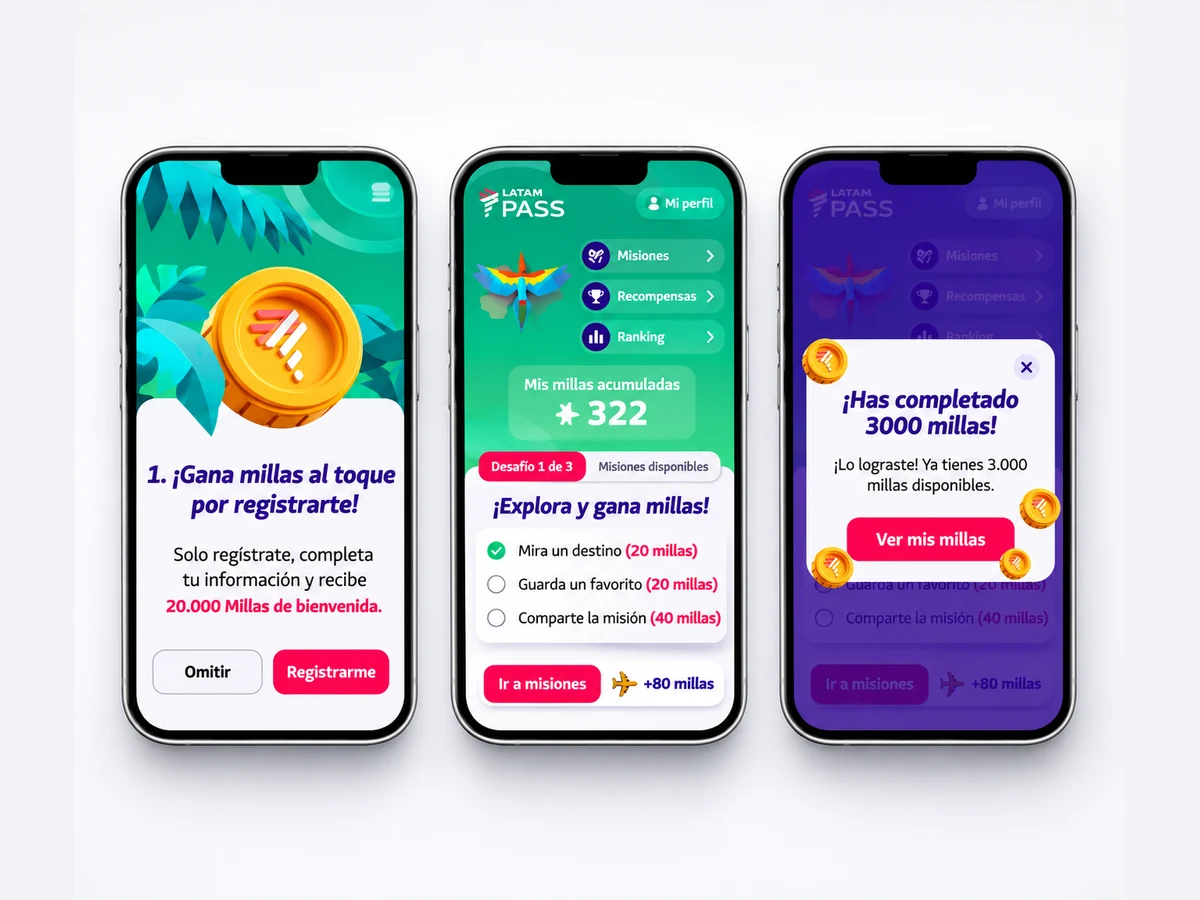
LATAM Airlines
LATAM wanted to test whether a gamified design could outperform its best traditional campaigns. We analyzed its business metrics and the motivational profiles of its member types. From that we designed a treasure hunt set in the Latin American jungle, with educational and mission sections tied to the desired actions. Rewards and mechanics were adapted to the different profiles.
- +123% mile accumulation compared with historical averages
- 1,407% rise in redemption engagement
- More than 160,000 unique visits
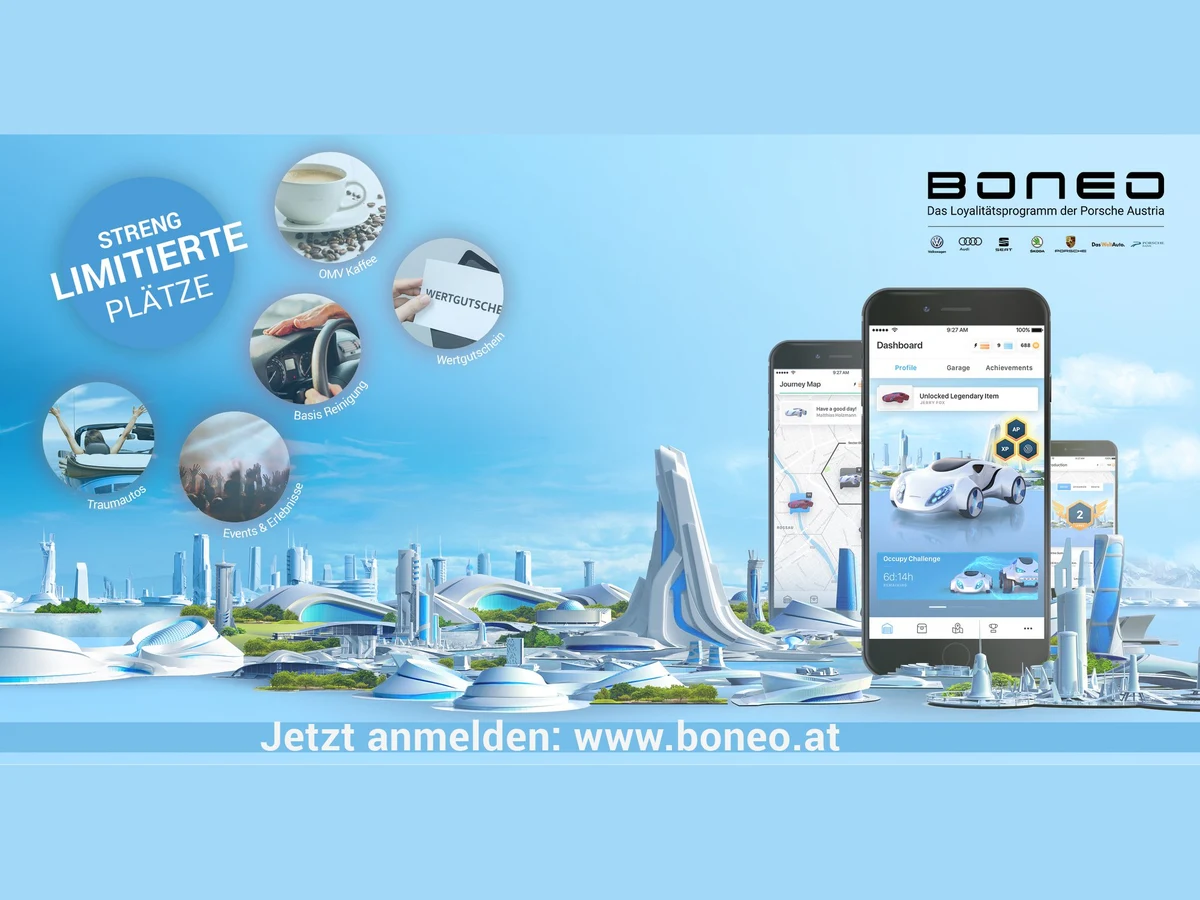
Porsche and Volkswagen
Porsche Motors and Volkswagen Group had a car app that gave owners little motivation to open it outside the car. We designed BONEO, with the Carvatar, lootboxes after drives, driving-style teams and a monthly challenge for territory on the map.
- 90% daily active users in the pilot phases
- 5.4 minutes average daily engagement
- +300% touchpoint interaction
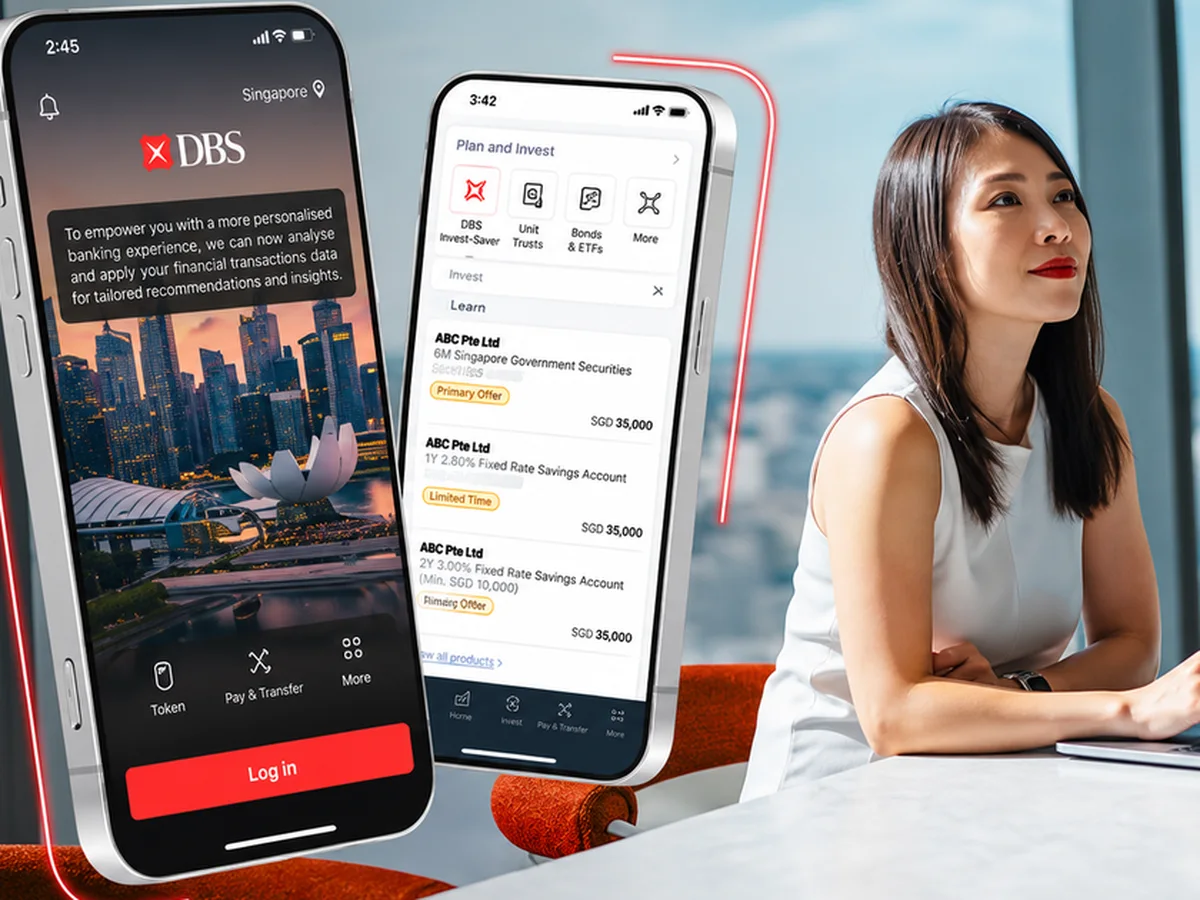
DBS Bank
DBS Bank wanted to compete with fintech newcomers on experience as well as price. Across six projects, from the credit card program to loan applications, we worked closely with the bank’s own teams. Members got their own paths, daily surprises and challenges against friends or their own benchmarks. DBS reported these results after one year, with 30% of the design implemented.
- +30% credit card spend
- +24% DBS PayLah transactions
- +20% loan approvals
- +15% savings account opening
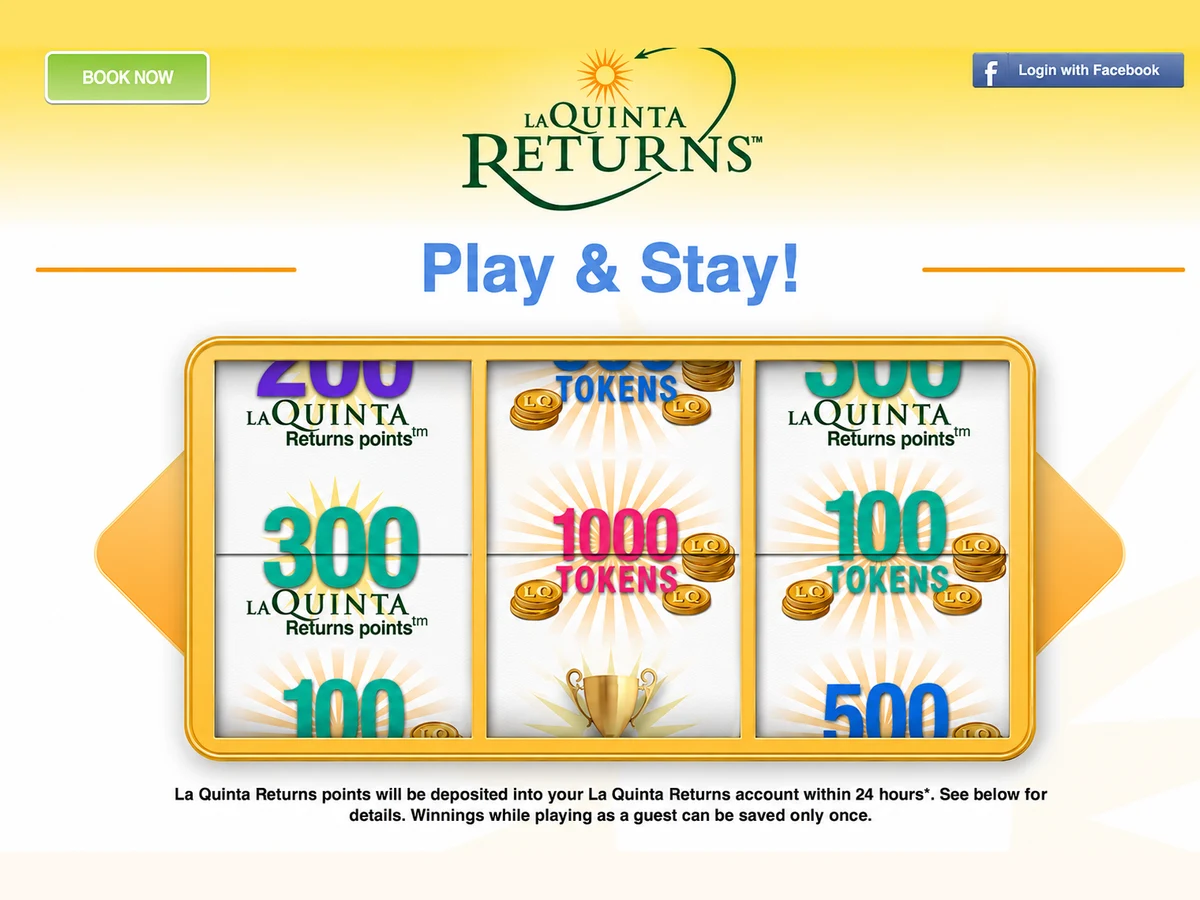
La Quinta
La Quinta wanted more from its Play & Stay app without changing the loyalty system underneath. We redesigned it around a spin mechanic powered by tokens that recharge over time. Members could double their score through trivia about La Quinta locations or by referring a friend.
- 712% sales uplift versus the control group
- +$157 (132%) revenue per user
- +206% bookings per user
- 530% viral coefficient and a 34% daily return rate
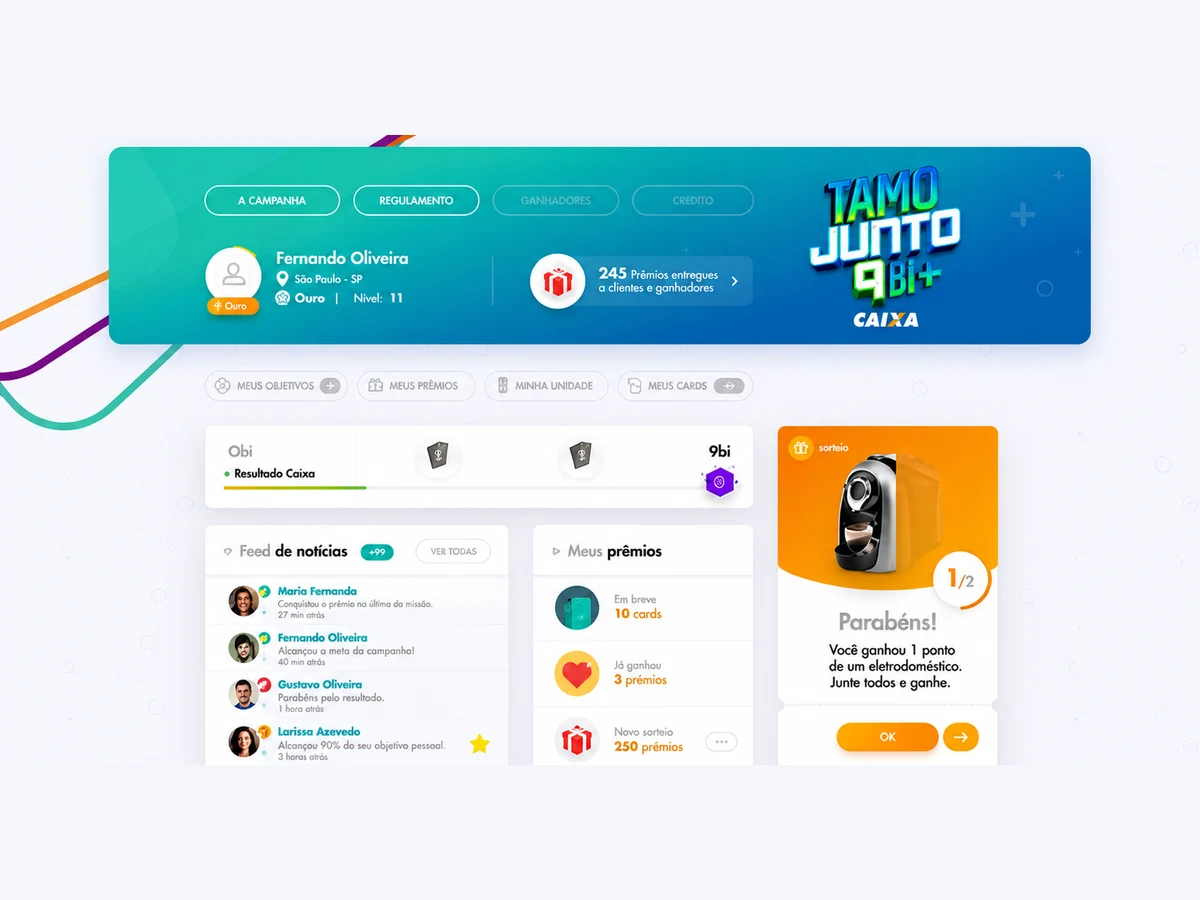
Caixa Econômica Federal
The same approach applies to workforce programs. Our work with Caixa Econômica Federal covers a sales-force program across 4,500 bank branches.
+153%
LATAM credit card acquisitions
712%
La Quinta sales uplift against the control group
132%
La Quinta revenue per user
Talk to us about your program
If you are planning a loyalty program, or redesigning one that has stalled at points and tiers, tell us which metrics you need to move and what your members do today. Our team will listen to your engagement challenges and tell you whether we are the right match.
Already have a project in mind? Let’s work together!
Our team will listen to your engagement challenges and decide if we are the best match.
Get in touchFrequently Asked Questions
How does Octalysis improve loyalty program retention?
Points and tiers are extrinsic and Left Brain, and they only go so far. Ownership and Possession (Core Drive 4) is part of that group too, so collecting things is still extrinsic motivation. We add intrinsic, Right Brain design on top. Empowerment of Creativity and Feedback (Core Drive 3) gives different members different strategies to advance, so they feel agency. Social Influence and Relatedness (Core Drive 5) gives them meaningful social collaboration to progress in their journey, which makes the experience more motivating for people who like social interaction. Unpredictability and Curiosity (Core Drive 7) means there is always something new to discover, with joyful surprises on a regular basis. We also make sure the journey evolves with the seniority of the member, and we design the endgame for veteran members, which almost every loyalty program forgets.
What makes gamified loyalty different from traditional points programs?
A traditional points program rewards a purchase. Only the people who buy enough ever benefit from the levels and rewards, and the design is usually linear. A gamified program rewards a wider set of actions and offers different paths to different kinds of members. The Octalysis Framework helps us build in progress, meaningful social collaboration, different strategies for different members and regular surprises. The discount is then one part of the experience.
What ROI can Octalysis loyalty programs deliver?
At La Quinta, sales rose 712% against the control group, with a 530% social (viral) coefficient; incremental revenue per user rose $157 (132% lift).