


Hospitality
Hospitality Conversion Gamification
The Octalysis Group created a new industry standard for hospitality and travel booking platforms.
33.4%Increase in gross bookings
We specialize in creating engagement in areas where it is difficult to achieve. We design customer journeys, employee experiences and learning programs around the motivations of the people taking part.
Our Booking.com, LATAM Airlines and P&G distributor Navo Orbico case studies show how that work connects to commercial results.
80%
Booking.com gross profit growth, 2015 to 2019
153%
LATAM increase in credit card acquisitions
28.6%
P&G revenue increase versus historical performance
Our approach uses the Octalysis Framework, created by Yu-kai Chou, to understand the motivation behind an experience. We learn from successful games because people choose to play them. Participation continues only while the experience remains engaging. Those lessons help us design productive activities that people otherwise experience as routine or obligation.
For that reason, our work goes beyond points, badges and leaderboards. These mechanics can recognize achievement, communicate progress or help people get started. Their value depends on the challenge, the audience and their place in the journey. We also design for agency, meaningful collaboration and discovery, so participation has value beyond the reward at the end. Our introduction to gamification explains the difference.
Behavioral science helps us decide what to change in an experience. Our account of the scientific foundations of Octalysis connects motivational psychology with behavioral economics. Those fields address different parts of the work. Someone comparing hotel rooms needs confidence and a decision they can act on. A sales representative using a system every week also needs an experience that stays engaging as they become more capable.
For repeated participation, Ryan and Deci’s Self-Determination Theory brings attention to autonomy, competence and relatedness. In our P&G work, representatives could choose strategies for developing their ships and help colleagues build a shared Port City. The design gave people influence over their approach and made cooperation useful to their progress. Increasing the number of points for a routine report would not provide those same opportunities.
The Fogg Behavior Model helps distinguish motivation from ability and prompts at the moment of an action. An easier form helps someone who finds it difficult. A reminder helps someone who intends to act but forgets. We also examine what makes the action worth taking from the user’s perspective. In learning, that includes the challenge, the feedback and what someone can discover as they progress. That is why our design covers the experience around the task as well as access to it.
Our case studies show what these principles mean in practice. A booking decision, an airline loyalty journey and a sales team need different designs. The relevant motivation changes with the activity and the people involved, so we do not carry a fixed set of mechanics from one project to another.
For Booking.com, our work focused on behavioral design for conversion. The case study describes how availability information, reviews and booking activity support urgency and confidence during a purchase decision. This is an example of gamification within a familiar commercial interface, without requiring the traveler to play a visible game.
The case study documents this work alongside Booking Holdings’ reported growth: an 80% increase in gross profit from 2015 to 2019 and a 33.4% increase in total gross bookings from 2015 to 2016. The value for your project is the application of behavioral science to the moment when a user needs to decide.
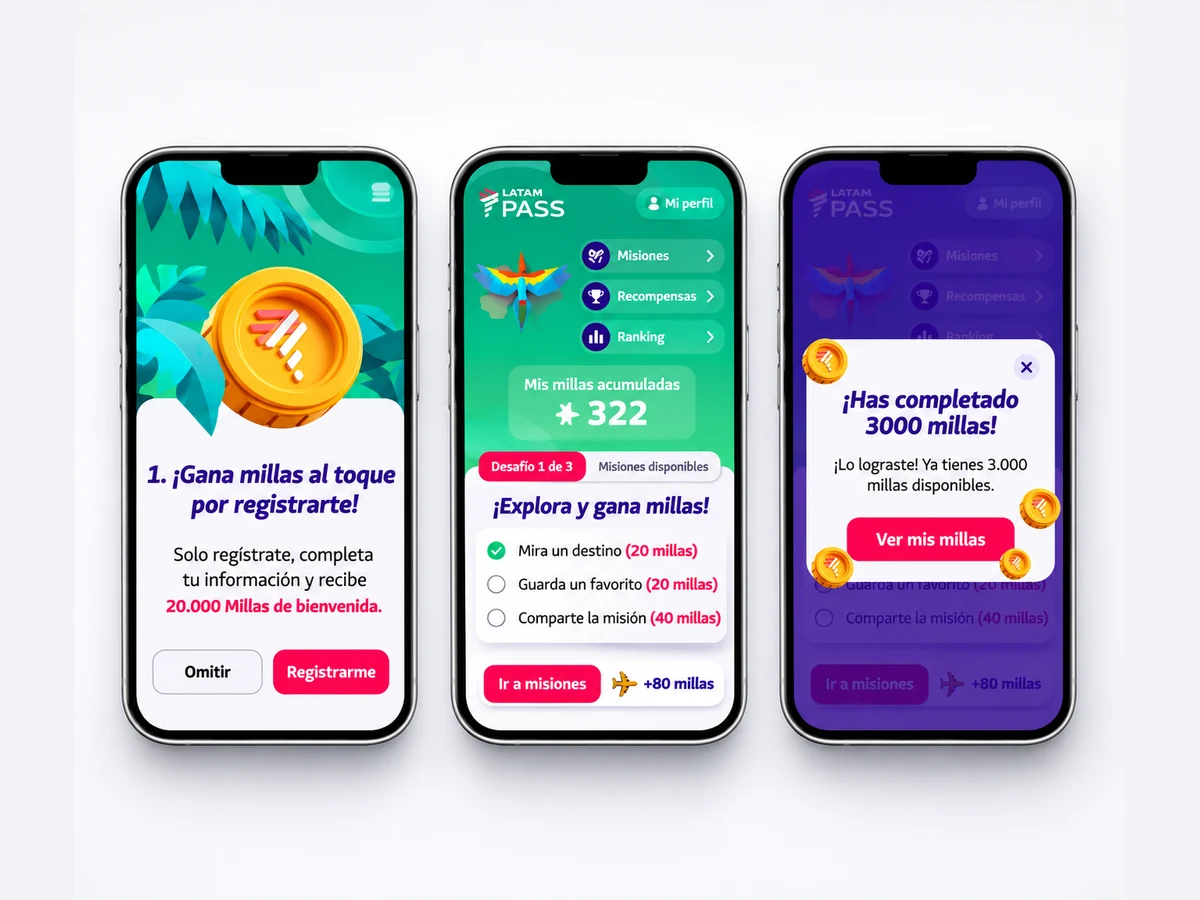
For LATAM Airlines, we examined the motivations of different members and designed an experience with educational and mission sections, exploration and rewards suited to their interests. The treasure hunt was one visible expression of that wider work. The case study reports 153% more credit card acquisitions, 123% more mile accumulation and 1,407% more redemption engagement.
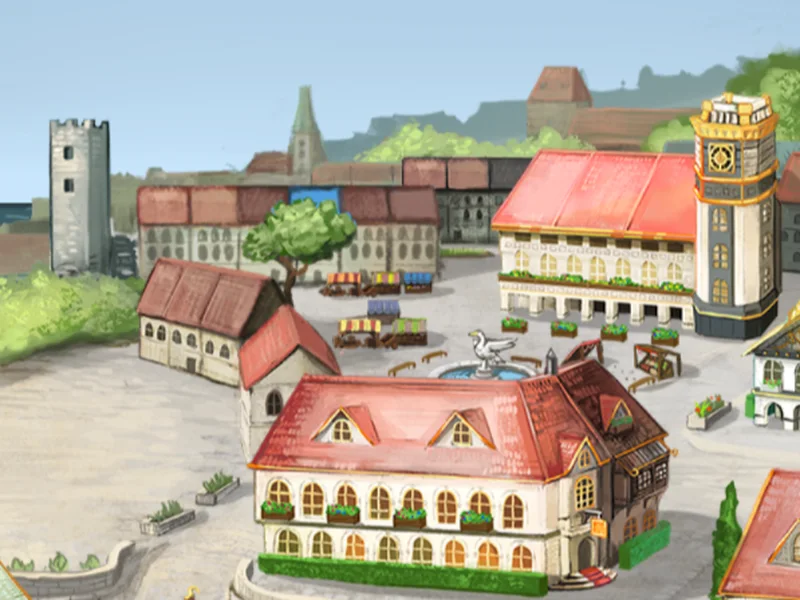
For P&G distributor Navo Orbico, we connected sales work to an experience in which representatives became trading captains, chose how to develop their ships and contributed to a shared Port City. Routine reporting, training and sales activity became part of a journey with individual choices and collective consequences. The case study reports a 28.6% revenue increase versus historical performance and 99.5% adoption in a noncompulsory rollout.
The same attention to motivation applies across our services. In learning and development, learners need more than a sequence of content to consume. In employee engagement, the culture and working relationships matter. In loyalty programs, people need valuable ways to participate beyond repeating a purchase. We adapt the design to those differences.
The journey also needs to change as people become experienced. The four Experience Phases of Octalysis distinguish Discovery, Onboarding, Scaffolding and Endgame. A newcomer needs guidance and an early achievement. An established user can benefit from more strategic choices, collaboration and discovery. Experienced participants can contribute as mentors and ambassadors, rather than continuing indefinitely through the same beginner tasks.
That evolution is central to the work we bring to your business. We develop the engagement strategy and the detailed experience design around your users and the results you need. The output gives your team the feature detail and wireframes needed to implement the experience, with motivation built into the journey.
For your project, the starting point may be a new product or an existing experience that people are not using deeply enough. You can explore the services above and our case studies, then contact us to discuss the engagement challenge you want to address.
Our team will listen to your engagement challenges and decide if we are the best match.
Get in touchChoose according to the experience you need to improve. The services cover health and wellbeing, digital transformation, loyalty programs, employee engagement, and learning and development. A project can involve more than one area, such as learning within a digital transformation.
The interface depends on the audience and purpose. Explicit gamification makes play visible. Implicit gamification uses game design principles within an experience that does not look like a game. We use the form that suits the people taking part.
Yes. We review an existing experience through human motivation and develop the strategy and experience design around the changes it needs. The work can address how people start, how they participate over time and what experienced users can contribute.
Case studies
Hospitality
The Octalysis Group created a new industry standard for hospitality and travel booking platforms.
33.4%Increase in gross bookings
Loyalty
Gamified loyalty experience with personalized missions and rewards, leading to record-breaking engagement and conversions.
+153%Increase in credit card acquisitions

Fast-moving Consumer Goods
Gamified sales platform transforming reps into virtual traders, boosting engagement and performance across 19 countries. Best Gamification Award.
+28.6%Increase in sales revenue
Thank you. Your message has been sent and we will reply soon.