Imagine you ask a product team to design the game of golf. A team that cares about efficiency will pick the ball up from the tee, walk to the hole 10 meters away and drop it in. That is much faster, and nobody would want to play it. Golf is engaging because of the obstacles, and people treat overcoming them as the reward. Good app gamification works on the same principle.
I think about apps in a similar way. Most product teams put their effort into making the app efficient and easy to use. That works if the user is already motivated, and they usually are not. When people hear the word gamification, they picture points, badges and a leaderboard added to that efficient app. That is why so many gamified apps fail. You will not get high engagement by adding some game mechanics to a function-focused application. The motivation has to be part of the experience itself.
So what does good app gamification look like? Often it does not look like a game at all. In this article I go through it using the four Experience Phases that Yu-kai Chou defined as part of the Octalysis Framework. Yu-kai describes the framework in detail. The examples come from our own projects, including LATAM Airlines, BitDegree and a Procter & Gamble distributor.
Why Adding Points Does Not Fix App Gamification
Points, badges and leaderboards are easy to build and easy to explain, so most teams start there. Points sit on the Left Brain side of the Octalysis octagon, mostly Core Drive 2: Development & Accomplishment. They are extrinsic and can be a reason to get started. Take the reward away tomorrow, and people stop doing the activity immediately. Our Duolingo review looks at what happens next. The extrinsic stimuli slowly replace what the person wanted to do in the first place.
The research points the same way. Deci, Koestner and Ryan pooled 128 experiments on extrinsic rewards and found that tangible rewards significantly undermined intrinsic motivation. An earlier experiment from 1973 showed the same with nursery school children. The ones who expected a certificate for drawing later drew less on their own. We go deeper into this in why simple reward systems fail at long-term habit formation.
A badge for a routine tap is basically a sticker. The real work is deciding which Desired Actions deserve recognition at all. We wrote about this in designing badges with Octalysis. We also covered leaderboards that still work for the people who are not at the top in how to design leaderboards that motivate everyone.
The deeper problem is efficiency without motivation. We list it among the six mistakes of products that fail to engage users, and good app gamification starts by fixing it. Someone checking a bank balance will put up with a clumsy app because they need the number. Almost nobody needs your app that much.
The Four Experience Phases of App Gamification
Think about the first time someone uses your app. Their motivation and skills are very different by the 50th or 100th time. That is why our working definition of gamification says people continuously come back to an experience, in the short, medium and long term, because the design is balanced across the eight Core Drives and evolves with their seniority over time. Yu-kai’s four phases are a way to design for that:
The Start
Discovery is how people first hear about the app and why they decide to try it. When a mandate pushes the app on people, they turn resistant or lukewarm. They use it to stay out of trouble.
Onboarding is where people learn what they can do and get their first win. It needs to be really simple: do this, do that, wow, you did it, do it again. Most apps onboard with pure admin, such as forms and permissions, before the user feels anything. Onboarding ends when people can use the app on their own. Yu-kai’s advice is to show the “why” before the “how” and to give small High-Fives along the way.
The Middle and the End
Scaffolding is the regular use. People come back, do mostly the same Desired Actions again and again, and slowly become senior users. The question here is why they would do the same thing again tomorrow. This is where we start adding more intrinsic design elements.
Endgame is for the veterans who feel they have done everything at least once. The question is what they can still do. Yu-kai calls them your best evangelists. With the right roles, such as role models or mavens, they become internal and external brand ambassadors. Designers spend the least time on this phase. Most designs stop at onboarding, and people tend to leave at the transitions between phases. Late Scaffolding and Endgame should rest mostly on intrinsic, White Hat design, with the Left Brain and Black Hat elements still present but no longer dominant. The same phases fit banks, as we show in gamification for banking and financial services.
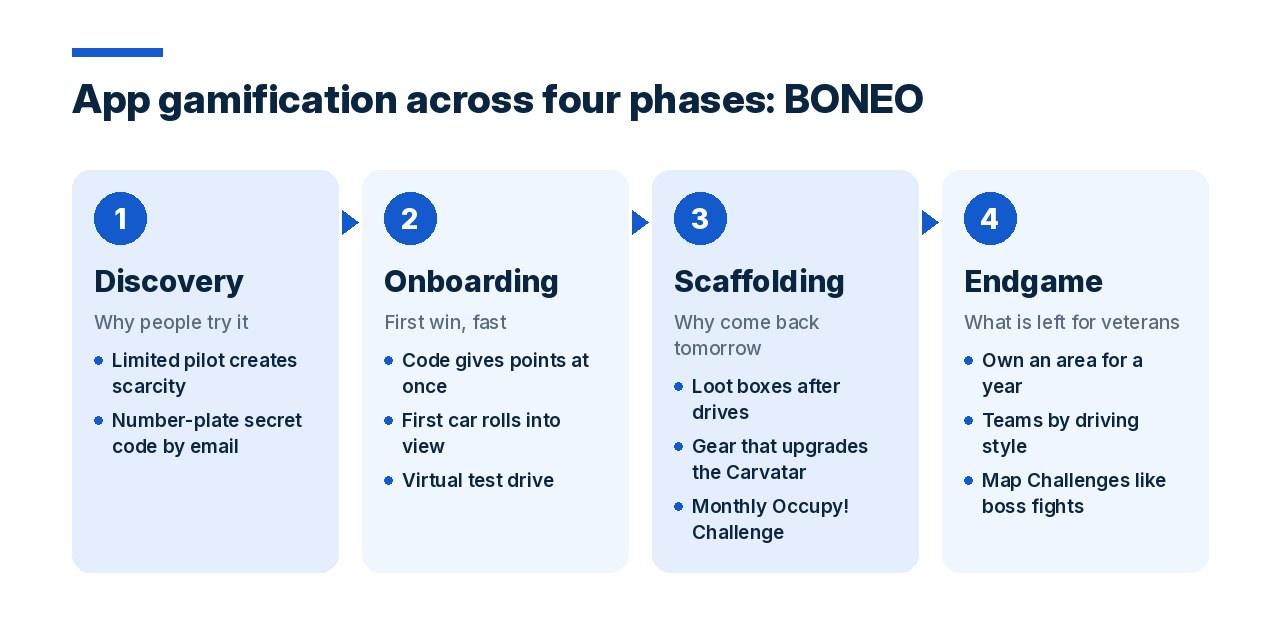
BONEO: App Gamification Through All Four Phases
The clearest example from our own work is BONEO, a loyalty app we designed with the Volkswagen Group. We described it when it launched in Austria, in how Octalysis revolutionised the Volkswagen Group loyalty program. That article does not report results, so I will not quote any here. What it does show is how the phases fit together in a single app.
Discovery and Onboarding in BONEO
Discovery. A limited pilot in Austria created Core Drive 6: Scarcity & Impatience around signing up. The marketing website showed people having fun in the car next to people bored in traffic: “Now you can have fun and earn rewards. Even in traffic!” After signing up, each user received a secret code by email, shaped like a number plate. The code opened the app once it was downloaded.
Onboarding. Most loyalty programs onboard you in a matter-of-fact way. You get a status, your first points, and that is it. In BONEO, entering the secret code gave you points straight away, and within seconds your first car rolled into view. That car is your Carvatar, the digital version of you in the app. Every user then took a virtual test drive on the map, without getting into a real car. That put the core activity loop in front of them in the first minutes.
Scaffolding and Endgame in BONEO
Scaffolding. Lootboxes dropped frequently but irregularly after drives, with up to six items each. The items were not cosmetic. Cooler wheels and headlights made the Carvatar more powerful. You could collect more Map Secrets and see more of the map. Collecting things (Core Drive 4: Ownership & Possession) gave people strategic advantages (Core Drive 3: Empowerment of Creativity & Feedback). The rewards fed back into how they played. After a few drives, users met the social side. You could see other users on the map and join the monthly Occupy! Challenge: drive through an area more than anyone else for a week and you occupy it for a month.
Endgame. For veterans, the long-term design was status and teams. Occupying an area brought extra rewards and status. Occupy it three times and you owned it for a year. The app also recognized three driving styles: Safe, Efficient and Dynamic. People with the same style could form teams for Map Challenges, which work like boss fights. Teams could be regional, national or international.
The real rewards were in there too. Just by driving, people could get free car cleaning, drinks, VIP event tickets and the use of a Porsche, after the app had given them a reason to open it.
Discovery: LATAM Airlines
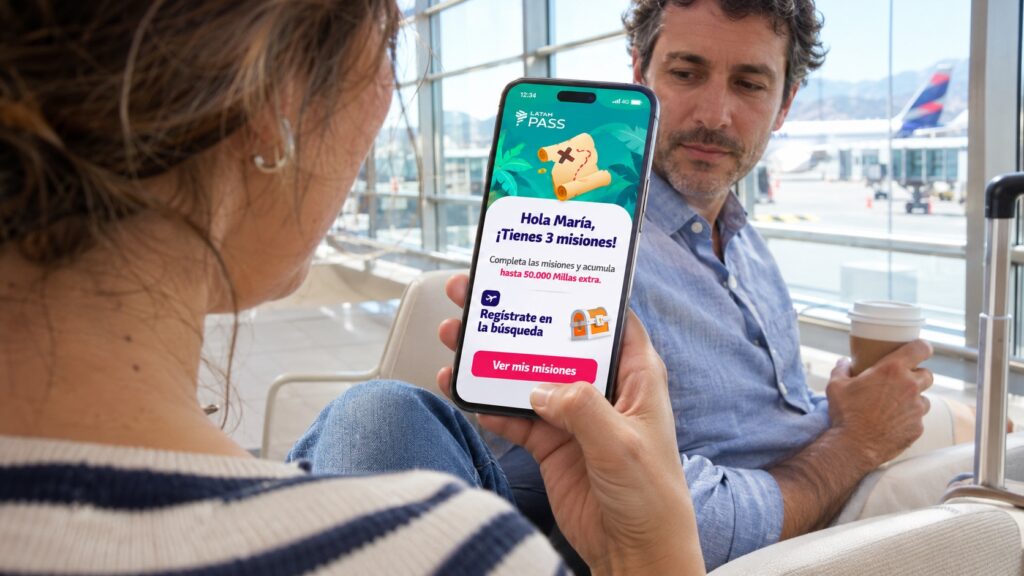
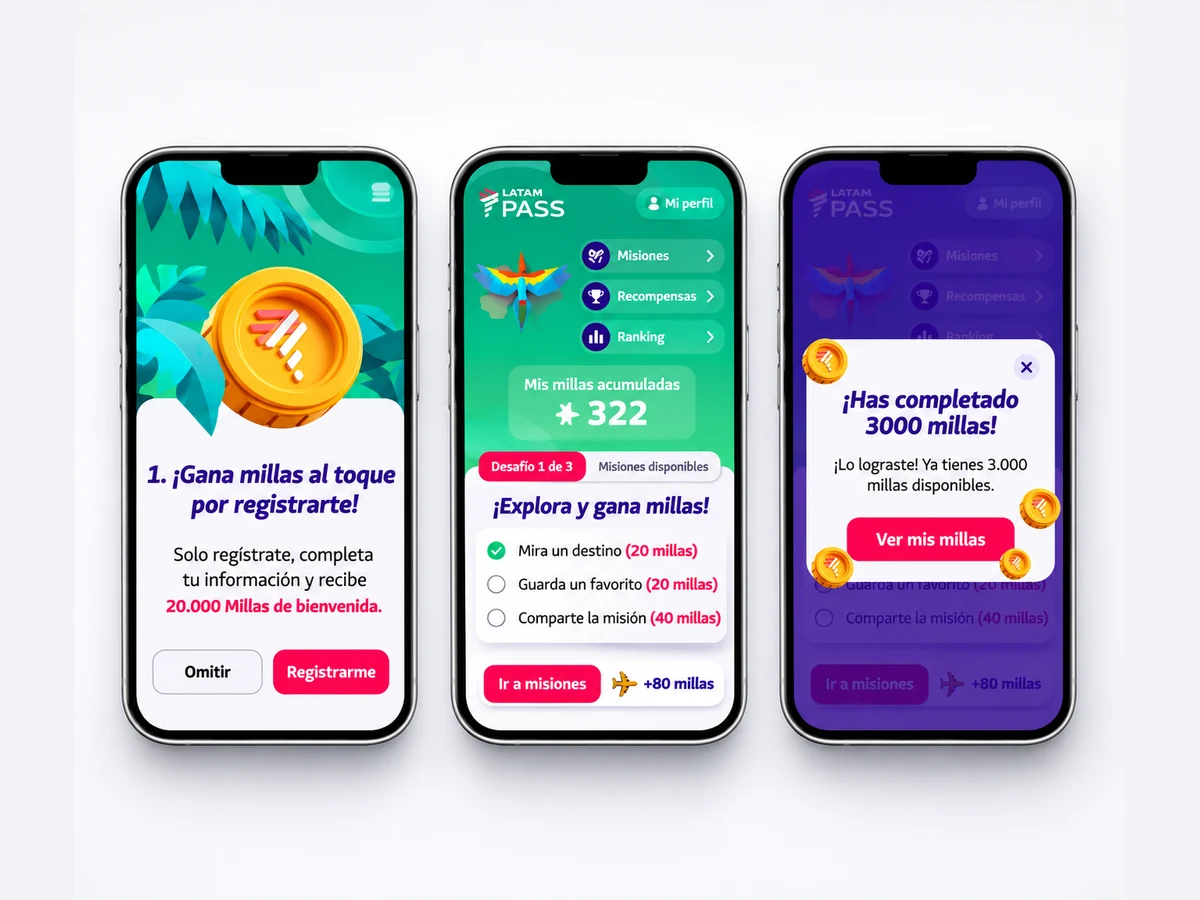
Strong app gamification starts in Discovery. A good Discovery phase gives people a reason to try something before they have committed to anything. LATAM Airlines members knew only static point offers. We replaced the banners with a Treasure Hunt in the Jungle. Members explored a map to find hidden treasures instead of just buying points. The design adapted rewards to the motivational profiles of different users. The campaign drew more than 160,000 unique visits. Mile accumulation rose 123%, credit card acquisitions 153% and redemption engagement 1,407%, against a goal of a 20% increase in conversion.
Many products lean on pressure at this stage, with a mandate or a forced first step. Yu-kai calls that Black Hat motivation. It works quickly, but people who join under pressure tend to stay lukewarm. A clear invitation, a story and something to explore work better. If you do use urgency, such as a limited pilot, never carry out the threat. Taking away what users have earned makes them feel out of control, and they leave.
Onboarding: BitDegree
BitDegree, an online learning platform, came to us because only 10 to 15% of MOOC users finish their courses. We helped the team define the purpose of each gamification element and built a gamified onboarding path. BitDegree then compared users who went through that path with a control group that went straight to the list of courses. In the BitDegree case study the team reports 350% more course completions, 400% more returning users and 300% more time spent on the platform.
Scaffolding and Endgame: A Procter & Gamble Distributor
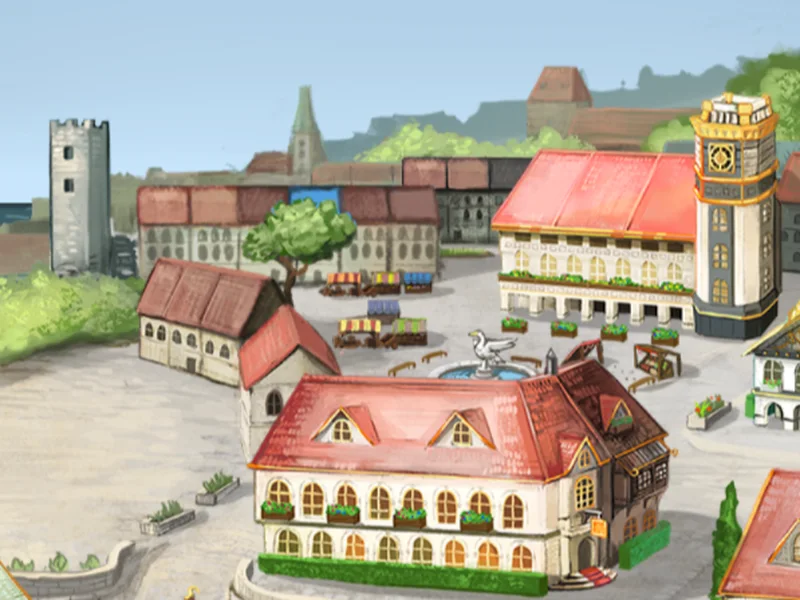
The longest-running proof we have is the Procter & Gamble sales project, with Navo Orbico, a distributor that operates in 19 countries. The sales reps became captains of trading ships and upgraded their ships with new skills. They shared a Port City that suffered natural disasters if the team missed its targets. It was built around the CRM they already used. The case page reports 99.5% adoption in a voluntary rollout, a 60% improvement in KPIs and 300% more social interaction. The program is now in its fifth year, with revenue 28.6% above historical performance. That tells you more about Scaffolding and Endgame than any first-week number. The upgrades gave people something to build, and the shared city gave strong performers a reason to help struggling colleagues.
Where App Gamification Projects Start
Before any design, we agree on the business metric the app has to move. Vague metrics need sharpening. Users becomes new users, and new users becomes weekly active users, because sign-ups who leave a month later are not success. Yu-kai tells the story of an eBay team that proposed time on page as its top metric. His reply was that they could then put a solitaire game on the page, and nothing would improve. The real metric was fewer bad buying experiences. Our Strategy Dashboard guide covers this step.
Next come the Desired Actions. No step is too trivial, including logging in or filling in a profile, because those small steps are where people drop out. Each screen should have one dominant action. For the eBay sellers these were replying within 24 hours, uploading more than four photos and printing shipping labels. We also map two mutually exclusive characteristics of the actual users into a 2×2, such as tech-savvy or not, and efficiency-focused or enjoyment-focused. The four resulting types need different journeys.
Questions to Ask About Your Own App Gamification
If I were looking at your app, I would start with a few questions:
- What is there to do for me every day, and why would I want to do it?
- Where do people leave? Look at the handover from Discovery to Onboarding and from Onboarding to Scaffolding first.
- What does a veteran user see that a newcomer does not?
- If you removed the rewards, which of your mechanics would still make sense?
In most apps one phase feels thin, whether it is the first impression, the middle or the veterans. If you know which one it is, you already know where to start with app gamification. The TOG case studies show how we handled each phase for other clients. The same phases explain why people try AI once and stop. Happy to discuss further, so feel free to contact us and we can look at where your app feels thin.