
- Home
- Case Studies
- Astana Hub
Case study · Innovation
Astana Hub Case Study: 504% Increase in Active Users with Octalysis Gamification
- Client
- Astana Hub
- Country
- Kazakhstan
- Industry
- Innovation Ecosystem
- Core Drives
- 2458
From a function-focused portal to a motivation-driven platform
The Octalysis Group partnered with Astana Hub to redesign engagement across the platform, turning a function-focused portal into a motivation-driven experience for Central Asia’s top startup community.
Astana Hub is the International Innovation Cluster and technology park for IT startups in Kazakhstan, founded by CEO Magzhan Madiyev. It is Central Asia’s top-ranked startup ecosystem and sits in the global top 75. Over 1,500 companies are registered as residents, and the community produced Kazakhstan’s first unicorn, Higgsfield AI.
Astana Hub asked The Octalysis Group to bring behavioral science rigor to the Hub’s platform experience, with the goal of making its gamification system world-class.
Using Octalysis to drive innovation and social engagement
Octalysis Behavioral Design drove a 504% increase in active users for Kazakhstan’s leading innovation ecosystem.
The Challenge
The Challenge
Astana Hub had built an impressive ecosystem of programs, partnerships, and resources. The platform, however, was not keeping pace. Its portal was function-focused, designed around content delivery rather than user motivation. Engagement was low, dropout was high, and the features meant to drive participation were falling flat.
A comprehensive Octalysis audit uncovered key problems:
Cognitive Overload at First Contact
The homepage was cluttered with too much information and too many menu options. Users hit choice paralysis before they could explore. A login pop-up appeared immediately on landing, interrupting new users who were still trying to understand what the platform offered, and the pop-up itself had no visible registration option.
No Structured Onboarding
New users entered the platform without a clear path. There was no guided first experience, no progress indicators, and no early wins. Users struggled to find relevant features and could not see the platform’s value quickly enough, resulting in high drop-off during the critical first sessions.
Friction in Mandatory Processes
Application processes, post-event forms, and administrative tasks were cumbersome. Users needed a laptop and electronic signature for most actions, which they avoided except when absolutely required. The perceived value of completing these tasks was low.
Rewards That Did Not Reward
Social Coins, XPs, Badges, and a Leaderboard were all in place. None of them moved the needle on engagement. Achievement criteria rewarded mere completion rather than quality performance, and there were no meaningful celebration moments when users hit milestones.
No Endgame for Veteran Users
Users who had been on the platform for months or years had nothing to keep them engaged. There was no progression path for veterans, no way to become a mentor or content creator, and no incentive to act as a brand ambassador. The platform treated a day-one user and a two-year veteran identically.
The Solution
The Octalysis changes
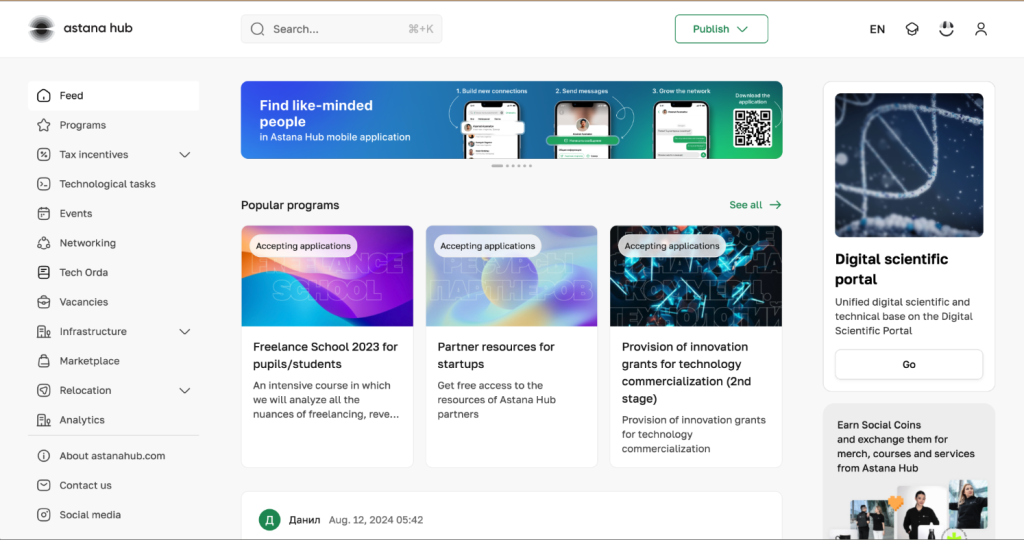
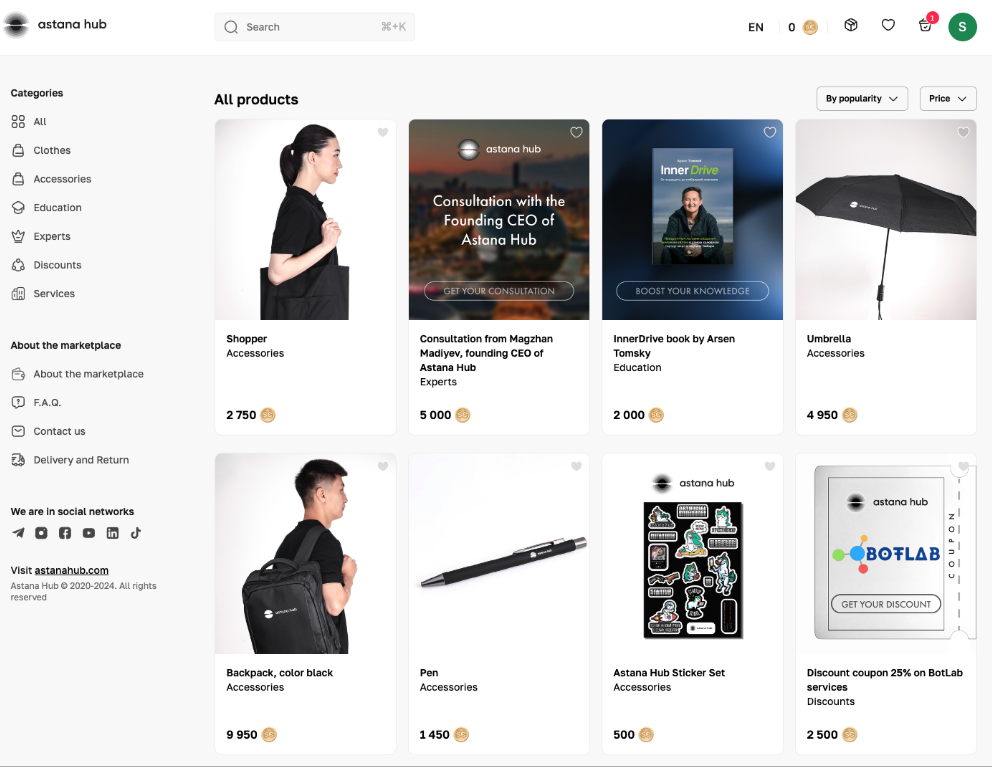
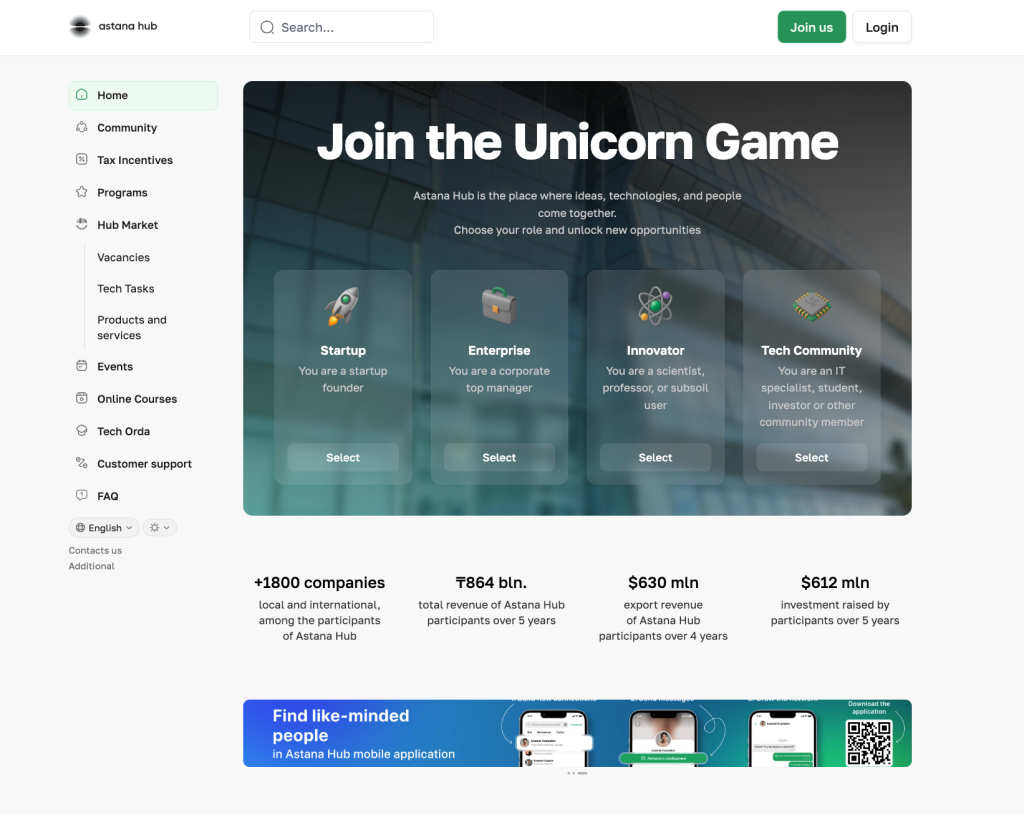
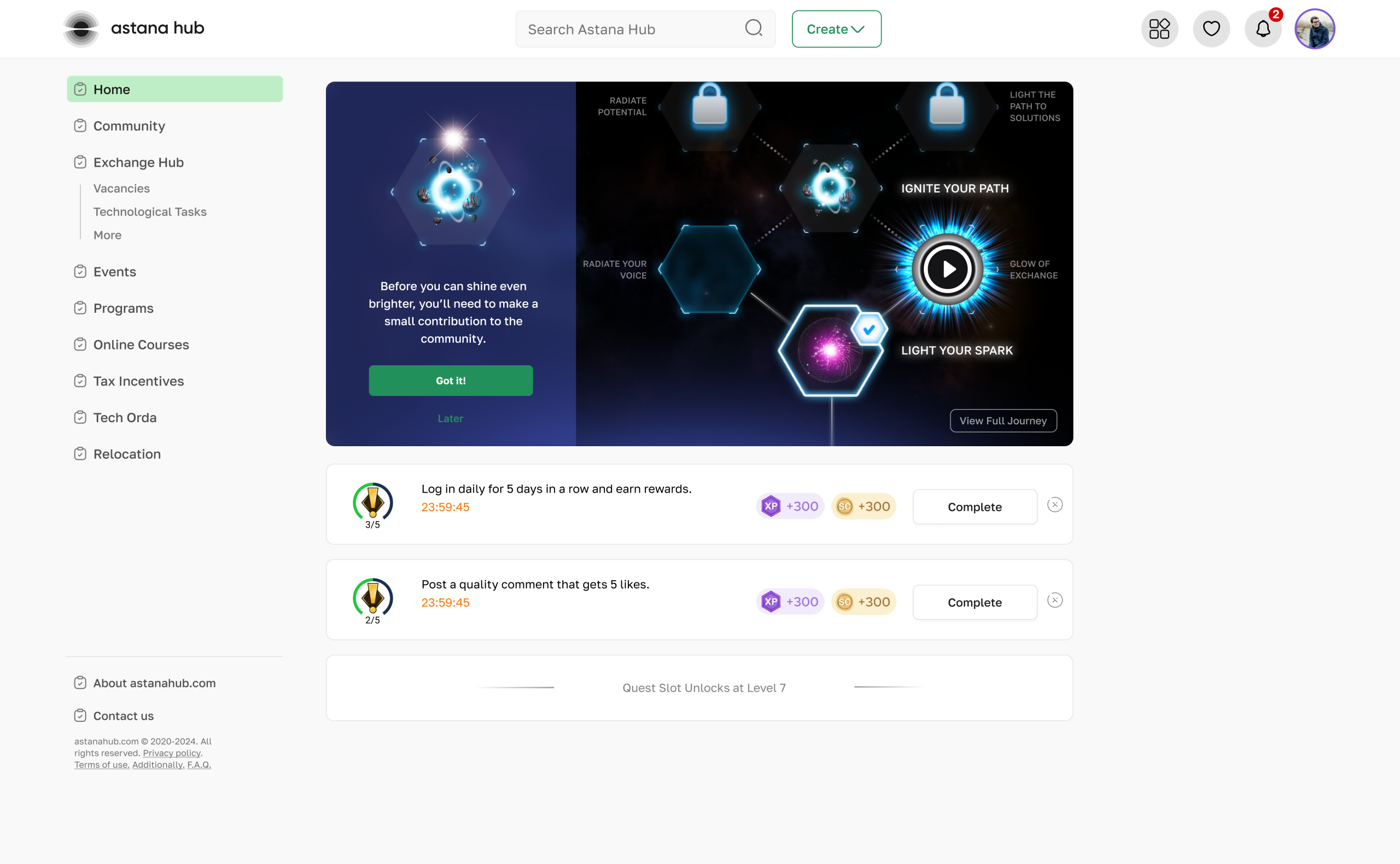
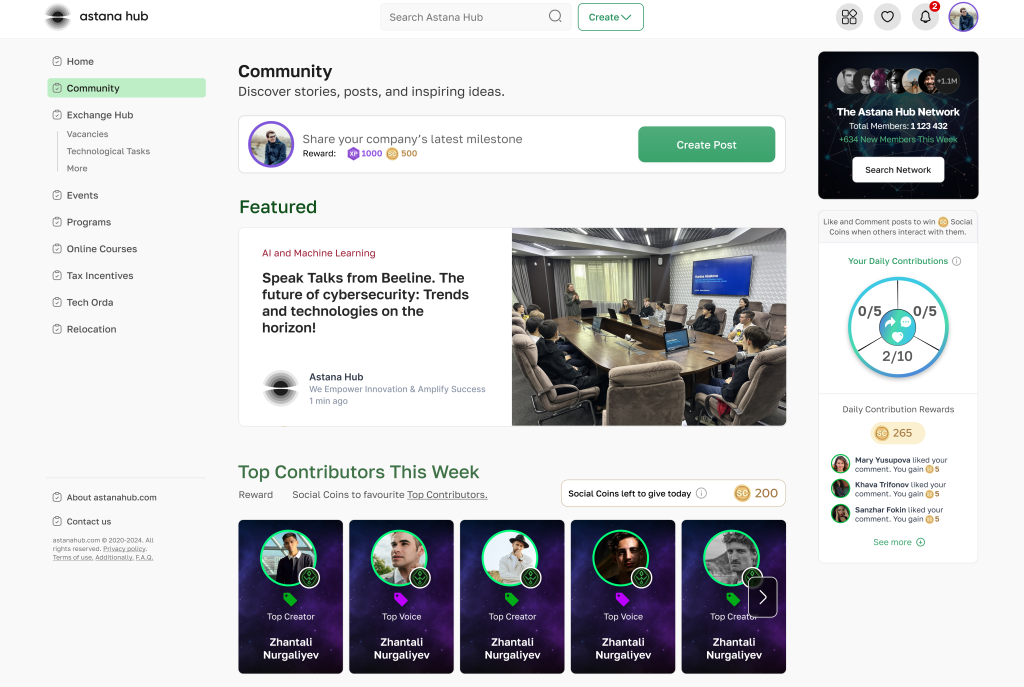
The collaboration covered the complete user journey: from Discovery through Onboarding, Scaffolding, and Endgame. Screens shown here are live or in progress.
Full System Audit and Analysis
TOG delivered a complete audit report, player type analysis, and behavioral personas. The audit mapped every friction point, misaligned reward, and missed opportunity across the platform.
Strategy and Design Documents
The team produced a Strategy Dashboard based on player types, Brainstorming Presentations with prioritized ideas, and a detailed P/E Feature List. These documents gave the Astana Hub team a clear roadmap from diagnosis to implementation.
UX/UI Design and Wireframes
TOG created designs, copywriting, and wireframes for onboarding flows tailored to different player types. Finalized wireframes covered the homepage, community page, marketplace, and network/feed page. Ongoing QA supported the implementation team throughout the build.
Engagement System Design
TOG designed specifications for challenges, streaks, badges, return triggers, and Journey Map completion mechanics. The gamification systems were rebuilt around XP (progress tracking) and Social Coins (community reward currency), with clear earn/spend logic tied to meaningful actions rather than arbitrary task completion.
The system designed by Octalysis rewarded startups that were more active in giving back to the community with higher visibility. That visibility leads to more opportunities for investment and preferential consideration for funding and financing opportunities.
Visibility is a reward the startups care about, and they now earned it by contributing to other members. That gave veterans a role and gave the community a way to grow from within.

Results
Results: 504% more active users against a 30% target
+504%
Increase in Active Users
1,500+
Registered Resident Companies
US$1B+
Value created by Hub residents
The first cooperation was a resounding success. Astana Hub had set a target for The Octalysis Group of a 30% increase in KPIs.
We achieved a 504% increase in active users on the Astana Hub platform, so the actual results were more than 15 times better than what was expected by the client. The increase was measured 6 to 12 months after the new design and the new application launched. Active users are people who are active on the platform and take the desired actions on a regular basis.
What a platform owner should take from this: Astana Hub had the points, badges and leaderboard before we arrived. The members became active once the rewards were tied to Desired Actions that mattered to them, and the journey changed with their seniority. The same pattern explains why most corporate software is never adopted, and why AI adoption is a motivation design challenge.
Next steps for Astana Hub are to optimize the journey with AI engagement and to increase integration on the blockchain, so that the experience becomes smarter for each individual user and their progress is locked in through tokenization. Read more about our AI Engagement Engine.
Related: our Digital Transformation services, the Microsoft Learn case study, and all our projects grouped by business problem in Gamification Examples.
Frequently Asked Questions
Q&A about our collaboration with Astana Hub
What is Astana Hub?
Astana Hub is the International Innovation Cluster and technology park for IT startups in Astana, Kazakhstan. Founded by Magzhan Madiyev, it is the highest-ranked startup ecosystem in Central Asia and sits within the global top 75 (StartupBlink, 2025). The Hub provides tax incentives (0% corporate income tax for participants), acceleration programs, coworking infrastructure, venture funding through Astana Hub Ventures, and partnerships with organizations like Google for Startups and Draper University. Over 1,500 companies are registered as residents, collectively generating $2.7 billion in total income. Astana Hub has produced Kazakhstan’s first unicorn, Higgsfield AI, valued at over $1.3 billion.
What results did The Octalysis Group achieve for Astana Hub?
The first major cooperation between The Octalysis Group and Astana Hub delivered a 504% increase in active users on the platform. TOG conducted a full behavioral audit of the Astana Hub portal, identified critical friction points across the Discovery, Onboarding, Scaffolding, and Endgame phases, and redesigned the engagement systems from the ground up. Deliverables included a complete audit report, player type analysis, behavioral personas, wireframes for key pages, a RICE-prioritized conversion backlog, and gamification specifications for challenges, streaks, badges, and return triggers.
How long does an Octalysis engagement take?
It depends on scope. A typical full Octalysis design process runs three to six months and covers the audit, strategy, brainstorming, feature design, and wireframing. Quality Assurance (QA) then continues alongside the client’s implementation team, often for an additional three to four months. Some clients, like Astana Hub, extend into ongoing support programs that cover new feature areas or platform expansions. Shorter engagements are possible for focused audits or single-phase redesigns. TOG structures every engagement around clear phases with defined deliverables, so clients know what they’re getting and when.
Unlock Your Business True Potential
Stop leaving revenue on the table. Apply the science of Human-Focused Design to your platform.