
Open the app of a loyalty program you joined years ago and hardly use. You will find a balance, a tier you are never going to leave, and an offer for something you were not planning to buy. There is nothing for you to do there, so you close it.
That is the experience of most members. In most loyalty programs I look at, up to 95% of the members are inactive.
Those inactive loyalty members are rarely your heavy buyers. They fly twice a year, buy a car every six years or shop with you a few times a season. They will never climb the tiers, and the program gives them nothing else to do. The only way to take part is to spend, so they don’t take part. A bigger points multiplier does not help, because it asks for more of the one thing they cannot give you.
What does help is a journey of other Desired Actions around the purchase: things members make and improve, people they connect with, and roles they earn. That is what we design with the Octalysis Framework, and our work for LATAM Airlines and for Porsche and the Volkswagen Group shows how.
Why loyalty program engagement stops at the purchase
Almost every loyalty program competes on the same things: award points, status points, discounts and offers. In Octalysis terms, all of it sits on the Left Brain side of the octagon. Points for spending run on Core Drive 4: Ownership & Possession. A bonus that expires on Sunday runs on Core Drive 6: Scarcity & Impatience.
Left Brain Core Drives lean on extrinsic motivation: you act because you want to obtain something. That gives you a burst of activity around the purchase and silence afterwards. For the member who flies twice a year, the silence lasts months. They may still earn miles every month through a co-branded card, but nothing they do inside the program changes anything.
A program like that is also easy to leave. When price is the only thing you compete on, members are loyal to whoever pays the most this week. I call these mercenary programs.
Core Drive 3 creates agency between purchases
The first thing I change is the place of the purchase. It becomes one Desired Action among several. An airline member can write a guide to a redemption that confuses people, buy through partner stores, or connect a newcomer with someone who has already solved the same problem. None of these needs a flight.
More actions alone will not hold anyone. What holds members is agency, and in Octalysis agency is Core Drive 3: Empowerment of Creativity & Feedback. It is at work when people figure things out, try different combinations, see the results and adjust. It is why playing with Lego is fun without anyone paying you for it. Yu-kai Chou gives a simple test in Actionable Gamification: if a hundred users all take the exact same actions to reach the Win State, the experience has no meaningful choices. In a spend-only program, every member takes the same path.
Here is that loop inside a loyalty program. A member knows how to book a partner award that trips people up, so she writes it up with her own booking as the example. Two weeks later she sees that forty members saved the guide and that nearly every question under it is about the step where fees are calculated. She rewrites that step and the questions stop. Her next guide opens with the hardest step. She tried something, saw what happened and made it better, and the improvement is hers. She also kept coming back without booking a flight.
This matters most after the first weeks. People who are new to an experience shy away from the effort creative work takes, so Core Drive 3 does more in Scaffolding and the Endgame than in Discovery and Onboarding. Scaffolding is the long middle of the journey. A spend-only program fills it with the next offer, and attention lasts as long as the offer does. Designed well, Core Drive 3 becomes an Evergreen Mechanic: you no longer have to keep adding content to keep the activity fresh. The members do that themselves.
We built this into BONEO, the gamified loyalty program we designed for Porsche and the Volkswagen Group. Members collect items for their Carvatar, a digital twin of their car, and those items change what the car can do in the app. Better headlights or wheels widen a driver’s view of the map, so they can collect more Map Secrets. What you collect gives you a strategic advantage, and that is where Core Drive 3 comes in: which upgrade do I go for next?
Reward what a contribution achieves
How you reward contributions decides whether Core Drive 3 survives. The common mistake is a fixed number of miles per post. That is a labor-driven reward: it pays for the act of posting. Members learn to post a lot and add little. When the payment stops, motivation often drops well below where it was when the reward was introduced. This is the overjustification effect.
A performance-driven reward pays for the traction a contribution gets. Did members save it? Did someone use it to plan a trip? Did experienced members, whose judgment carries weight in the community, recognize it? One guide to a difficult connection that fifty members use should earn more than twenty posts nobody saved. The miles become feedback on the member’s own judgment, which is what Core Drive 3 runs on. And because that feedback comes from other members, it brings in Core Drive 5: Social Influence & Relatedness.
Player Types decide which journeys to build
Which journeys you build depends on who your quiet members are, and a persona will not tell you. A persona for the twice-a-year flyer reads: 38, works in marketing, two family trips a year, compares prices. That tells me how she lives, not what would make her open the app. A Player Type shows which Core Drives move a member inside the experience, and that is something I can design for. We do not take Player Types from a stock typology. We work them out for each program, from what the client knows about its own members.
Three members can share that persona and belong to three different Player Types. One enjoys finding the smartest way to do something. Core Drive 3 is strongest in her, with Core Drive 2: Development & Accomplishment close behind, because she also wants to get better at it. For her you design the guide loop above. Another likes being the person who knows whom to ask. Core Drive 5 leads for him, with Core Drive 1: Epic Meaning & Calling behind it, the wish to be useful to more than himself. For him you design introductions between newcomers and experienced members, with a message back when the person he helped books the trip. A third enjoys watching a balance grow toward something specific, which is Core Drive 2 together with Core Drive 4. Her partner purchases visibly move her toward a reward she picked herself. All three end up taking the same Desired Actions. What differs is the journey that gets each of them there.
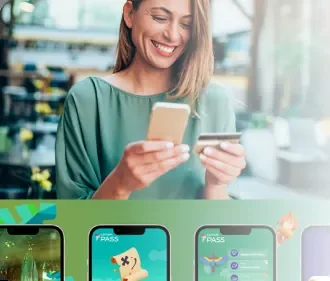
This is how we started with LATAM Airlines. We translated what LATAM knew about its audience into a motivational profile for each audience type, expressed in the 8 Core Drives. Then we defined the Desired Actions, and most of them had nothing to do with booking a flight: applying for the LATAM Pass credit card, accumulating and redeeming miles, answering surveys and updating personal data. The design was a treasure hunt through the Latin American jungle. Members explored a map to find hidden treasures with varying rewards, which is Core Drive 7: Unpredictability & Curiosity. A countdown on hidden coins added urgency, and members could see what others were doing.
The campaign drew more than 160,000 unique visits. Mile accumulation rose 123% compared to historical averages, credit card acquisitions rose 153%, and engagement with redemption jumped 1,407%. Two of those three increases come from actions that are not a flight.
That campaign was built to show results within 30 days, and it spoke to members who were already active. Our original write-up names LATAM’s inactive members as the next step, because they have a very different motivational profile. Your quiet members need their own design, and it has to start with making them want to come back on a day when they are not buying anything.
Daily return without a purchase
A car is one of the least frequent purchases people make, which makes automotive loyalty the hardest version of this problem. The challenge in our work with Porsche and the Volkswagen Group was to get someone to open a car app when they are not in the car.
BONEO made drivers want to come back every day. Lootboxes dropped frequently but irregularly after drives, holding up to six items, and Map Secrets waited to be collected. That is Core Drive 7: you open the app because you don’t know what is in it today. In the monthly Occupy! Challenge, a driver who dominated a region for a week occupied it for a month, and after three occupations owned it for a year. Now there is something to defend.
Drivers were also recognized by driving style (Safe, Efficient or Dynamic) and could form regional, national or international teams around it. Driving alone became something you do with others. In pilot phases, BONEO reached 90% daily active users. Our case study also reports an average of 5.4 minutes a day in the app and a 300% increase in interaction with touchpoints such as garage, fuel and food services.
An airline can do the same. Today most airline programs give a member nothing to do unless they are flying. I want them to have something to learn, discover or earn every day. Let a member become the recognized expert on one airport or one country: the person who knows the fastest transfer in Madrid, or where to eat on a six-hour layover in Lima. Every day somebody is flying through her airport tomorrow and has a question, and every good answer adds to a standing other members can see. The member who would rather explore finds something new each day, such as a destination that has come within reach of his balance. Neither of them needs a ticket.
Lootboxes and countdowns are Black Hat techniques: they work through urgency and uncertainty. They get someone to act today, and a program built on them alone burns its members out. They need White Hat design next to them, which leaves members in control of something they built. In BONEO that is the Carvatar, the team and the territory. In the airline it is the expertise a member is known for.
Veterans stay for the role they have earned
The Endgame is about keeping the members who have been with you for a year or more. In most programs the only veterans anyone looks after are tier holders, and what holds them is Core Drive 8: Loss & Avoidance, the fear of losing the tier. A competitor’s status match removes that fear with one email.
A role does not transfer, and a member who rarely buys can earn one. Take the woman who wrote the partner-award guide. She has flown with you four times in two years, and by now she is the person others ask. Make her a mentor. Pair her with a member planning a first redemption, and let her hear afterwards how the trip went. She has worked for that position, and now what she knows is being used.
This is what I mean by turning veterans into brand investors: members who model the behavior, help newcomers get started and carry the experience outward. Give your mentors a shared purpose, such as getting every new member to a first trip, and show them the trips they made possible. Then they belong to something larger than their own balance, which is Core Drive 1 again.
What a competitor cannot copy
A competitor can match your miles, your bonuses and your status tiers. It cannot copy the guide a member is still improving in your program, the team they drive with, the newcomer they got to a first trip, or the weight their recognition carries with other members. Those grow from the member’s own history with you.
Designing that history is the work The Octalysis Group does with loyalty programs.
Go back to the member who flies twice a year. In a few months they will book again. If your program is still only a balance, they will compare fares and take the cheapest seat. If a reply to their guide is waiting, or a message from the mentor who wants to hear how the last trip went, they are already inside your program when the next trip takes shape.
Most of your members are in that position today. To see what their journey could look like, contact us.
Frequently Asked Questions
Why do most loyalty members become inactive?
In most loyalty programs the only way to take part is to spend. Members who fly twice a year, buy a car every six years or shop a few times a season will never climb the tiers, and the program gives them nothing else to do. A bigger points multiplier does not help, because it asks for more of the one thing they cannot give you. Our article on customer loyalty gamification explains why points programs struggle.
How do you engage inactive loyalty members between purchases?
Make the purchase one Desired Action among several. A member can write a guide to a redemption that confuses people, buy through partner stores, or connect a newcomer with someone who has already solved the same problem. What holds members is agency, which in the Octalysis Framework is Core Drive 3: Empowerment of Creativity & Feedback. They try something, see what happened and make it better.
How should a loyalty program reward member contributions?
Reward what a contribution achieves. A fixed number of miles per post is a labor-driven reward, and members learn to post a lot and add little. A performance-driven reward pays for the traction a contribution gets: whether members saved it, used it to plan a trip, or whether experienced members recognized it.
What results has loyalty program engagement beyond the purchase produced?
For LATAM Airlines, The Octalysis Group designed a treasure hunt around Desired Actions such as applying for the LATAM Pass credit card and redeeming miles. Mile accumulation rose 123% compared to historical averages and credit card acquisitions rose 153%. BONEO, the gamified loyalty program The Octalysis Group designed for Porsche and the Volkswagen Group, reached 90% daily active users in pilot phases.
Can AI personalization bring inactive loyalty members back?
AI already personalizes offers at scale. It predicts what a member is likely to buy, and it has no view on why that member would care about the program. An AI agent cannot personalize a meaningful choice that the program never provides, so the journey of Desired Actions has to be designed first. We cover this in AI loyalty program design and in our hub on AI user engagement.