Gamification: The Key to Winning Customers in Banking and E-Commerce
 Joris Beerda30 July 2025
Business managers and innovation leaders in banks and e-commerce face a relentless challenge: how to capture customer attention, build loyalty, and drive growth in a world where digital experiences reign supreme. Standard approaches, loyalty programs, discounts, or slick apps, often fall short of sparking the engagement needed to stand out. That’s where gamification business consulting comes in, a strategy that turns routine interactions into compelling, rewarding experiences. Using the Octalysis Framework, we’ve spent years helping businesses transform how they connect with users. This post unpacks research on gamification’s impact, shares real successes from our work, and shows why leaders in banking and e-commerce should lean into gamification to stay ahead.
Why Gamification Matters
Gamification isn’t about tossing badges or points into an app, it’s about designing experiences that tap into what makes people tick. By weaving in elements like challenges, progress tracking, or social competition, businesses can make saving money or shopping online feel like a game worth playing.
Well-designed gamification programs are consistently linked to higher engagement and stronger customer and employee behavior. For banks and e-commerce, where customer retention and digital adoption are critical, gamification business consulting offers a way to meet users where they are, craving interaction, meaning, and rewards.
What Is Good Gamification, and What Is Not?
Good gamification goes beyond superficial game mechanics; it’s about creating meaningful, human-focused experiences that drive long-term engagement. According to our insights, effective gamification is rooted in understanding human motivations, things like purpose, mastery, or connection, and aligning them with business goals. For example, a bank might use a savings challenge that rewards users for hitting milestones, fostering a sense of accomplishment. Good gamification feels organic, empowering users to act because they want to, not because they’re coerced.
On the flip side, bad gamification is shallow, often relying on generic points or leaderboards without context. Slapping badges on a banking app without tying them to user goals can feel manipulative and erode trust. Similarly, overloading users with rewards that lack meaning leads to “gamification fatigue,” where engagement drops as the novelty wears off. The key difference lies in design: good gamification uses behavioral science, like our Octalysis Framework, to create sustainable, user-centric experiences, while bad gamification prioritizes short-term gimmicks over lasting impact.
The Octalysis Framework guides this process, built on eight core drives of human motivation, from the thrill of accomplishment to the pull of social connection. It’s not about slapping game mechanics onto a platform; it’s about crafting experiences that resonate deeply. Let’s dive into how this plays out in banking and e-commerce, with hard data and real-world wins.
Banking: Making Money Management Addictive
Banks have long relied on trust and stability to keep customers, but today’s digital-first world demands more. Younger customers, Millennials, Gen Z, want banking that’s engaging, not just functional. Gamification flips the script, turning tasks like saving or budgeting into journeys that feel rewarding. Here are some really appealing success stories:
Caixa Bank’s Billion-Dollar Leap
One of our biggest wins was with Caixa Bank in Brazil, where we gamified productivity for 85,000 employees across 4,500 branches. We rolled out team challenges, progress bars, secret missions, collection sets and achievement badges, hitting on the drive for accomplishment and social connection. The outcome? A 49% increase in net income, about $1 billion, and CAIXA became the #1 bank in Brazil (see the CAIXA case study). This wasn’t just about customers, it showed how gamification business consulting can overhaul internal operations, delivering massive financial impact.
BBVA Game: Hooking Customers with Rewards
Take BBVA Game, launched by BBVA in 2012. It rewarded users with points for transactions, watching financial education videos, or rating the platform, which taps into the drives for ownership (collecting points) and curiosity (what’s next?). This proves gamification can make banking sticky and drive loyalty.
Capital One’s CreditWise: Learning That Sticks
Capital One’s CreditWise platform gamifies financial literacy with its Credit Simulator, letting users test how paying off debt or opening a credit line affects their score. This plays on the drive for creativity and feedback, giving users control and clear outcomes. For bank managers, gamification business consulting is a clear path to deeper customer ties.
E-Commerce: Turning Shoppers into Loyal Fans
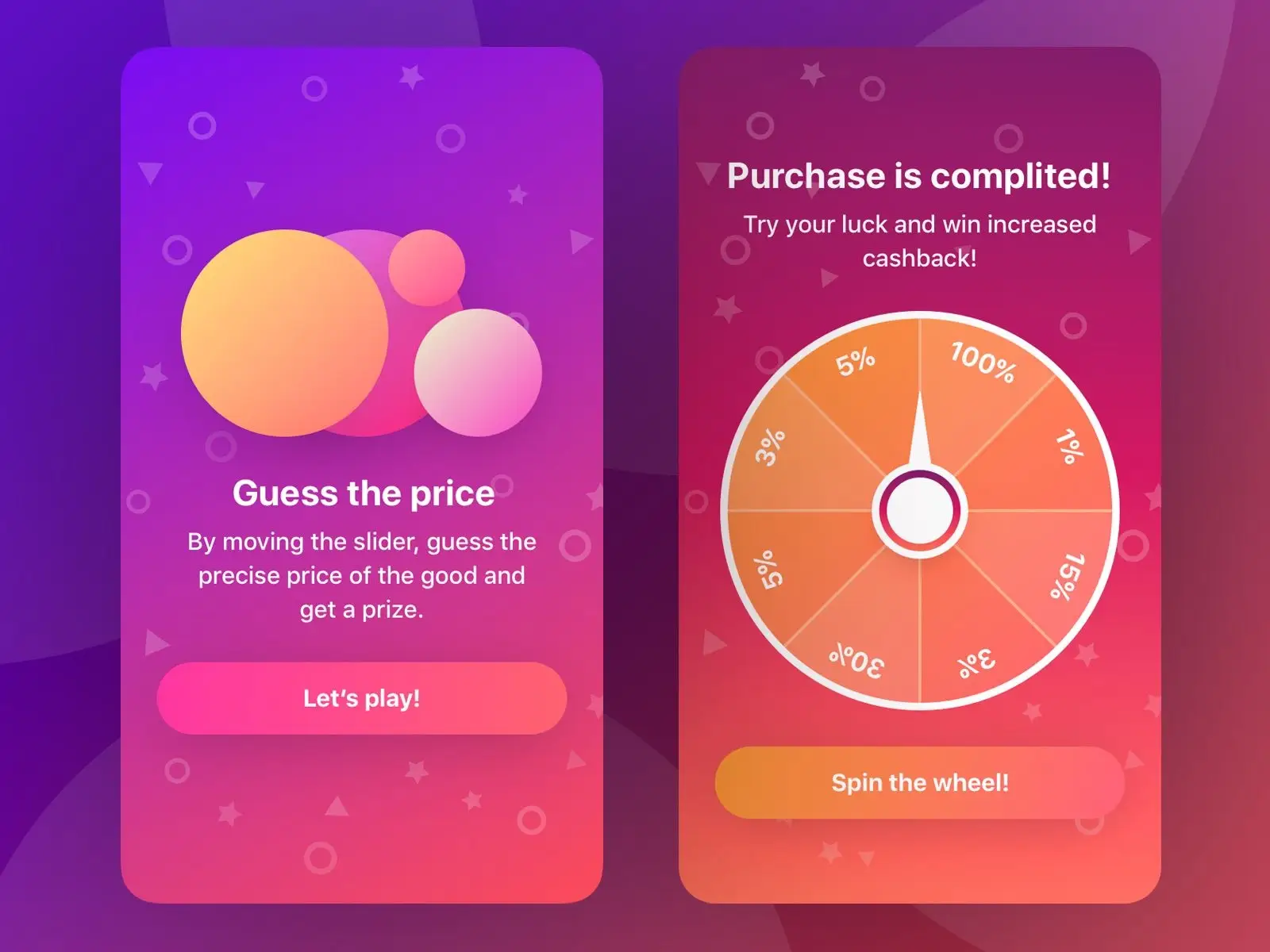
E-commerce is a battlefield, brands fight for every click, cart, and checkout. Gamification cuts through the noise, making shopping fun and urgent. Spin-the-wheel discounts, personalized strategies, timed challenges, or progress toward VIP status keep users coming back.
HTC VIVE 188% Revenue Surge
We worked to gamify HTC VIVE’s e-commerce funnel, from social media to sales. Limited-time challenges sparked urgency (scarcity drive), while social sharing incentives built community (social influence). The result? A 188% increase in e-commerce revenue. This shows how gamification business consulting can weave a seamless, engaging journey that pays off big. Explore more wins on our case studies page.
BitDegree: Lessons for Retail
Our project with BitDegree, a blockchain-powered online learning platform, offers a parallel for e-commerce. Low course completion rates were a hurdle, so we used the Octalysis Framework to add cryptocurrency rewards for finishing courses, leaning on ownership and creativity drives. The result was a 350% increase in course completions.
Think of this like e-commerce loyalty points or exclusive perks, rewards that lock in commitment. We can help you apply this to your business.
The Octalysis Framework: Why It Works
The Octalysis Framework is our secret sauce, mapping eight drives that shape behavior: Epic Meaning & Calling, Development & Accomplishment, Empowerment of Creativity & Feedback, Ownership & Possession, Social Influence & Relatedness, Scarcity & Impatience, Unpredictability & Curiosity, and Loss & Avoidance. In banking, we use accomplishment to celebrate savings milestones. In e-commerce, scarcity drives flash sales. Each drive is a lever to create experiences that stick. Unlike generic gamification, our approach is precise, balancing drives to align with business goals and user needs. Dive deeper into how it works on our framework page.
Why Bank and E-Commerce Leaders Must Act
For innovation managers in banks and e-commerce, gamification business consulting isn’t optional, it’s urgent. Our track record shows the payoff: CAIXA’s 49% increase in net income, a hotel chain’s 132% sales increase and an airline’s 153% increase in credit card acquisitions (see our case studies). These aren’t flukes, they’re the power of Octalysis at work.
The stakes are high. Customers expect experiences that feel personal, rewarding, and fun. Fall behind, and you lose them to competitors who get it. Gamification business consulting lets you meet those expectations while driving revenue and loyalty.
How We Can Help
We’ve worked with more than 175 companies, blending behavioral science and creative design to deliver results. Whether you’re a bank aiming to grow digital adoption or an e-commerce brand chasing conversions, our Octalysis -powered solutions are built for you. Curious? Contact us or explore our case studies to see what’s possible.
The Bottom Line
Gamification is reshaping banking and e-commerce, turning transactions into experiences that customers crave. With the Octalysis Framework, we’ve driven a 350% increase in course completions, a 49% increase in net income and a 188% increase in e-commerce revenue. For business managers and innovation leaders, the choice is clear: embrace gamification business consulting to lead the pack. Let’s build something unforgettable together.
Frequently Asked Questions
How is gamification used in banking?
Banks use gamification to make saving, budgeting and financial learning more engaging, for example through savings challenges, milestone rewards and simulators. It is also used internally: CAIXA gamified sales work for 85,000 employees.
How does gamification improve e-commerce results?
By adding urgency, progress and community to the shopping journey, for example through limited-time challenges, spin-the-wheel rewards and social sharing. In an Octalysis project for HTC VIVE, this contributed to a 188% increase in e-commerce revenue.
What makes bank and e-commerce gamification fail?
Shallow mechanics. Generic points and leaderboards without a link to user goals can feel manipulative, erode trust and lead to gamification fatigue once the novelty wears off.
The Octalysis Group is the world’s leading consultancy in behavioral design and Gamification. To apply this in your organization, contact us.
Joris Beerda is the world’s leading practitioner in Octalysis and expert in enterprise gamification.