
- Home
- Health and Wellbeing Gamification: Patient Adherence and Health App Engagement
Health and Wellbeing Gamification: Patient Adherence and Health App Engagement
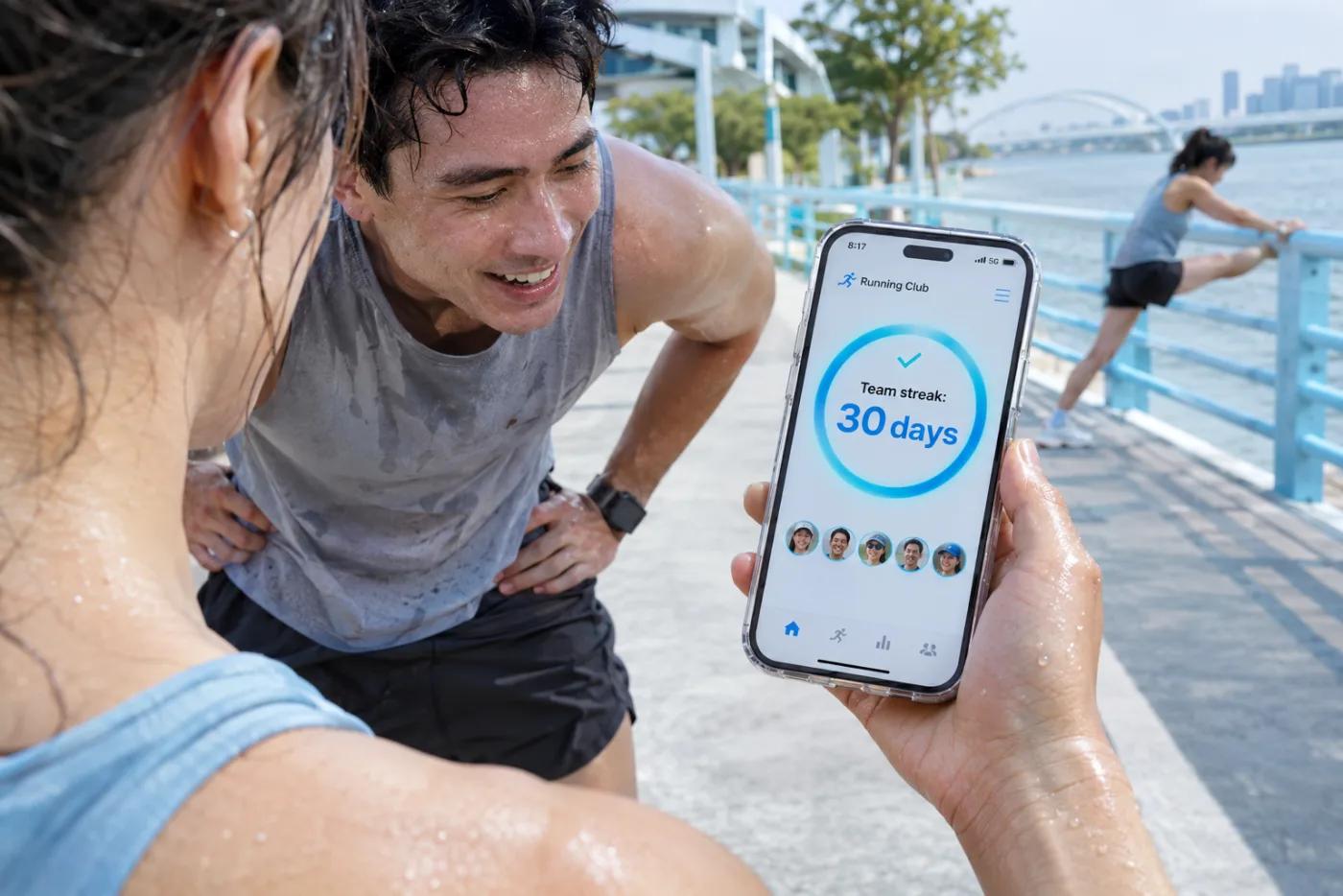
We design patient programs, health apps and wellbeing programs that people are still using months after the first week.
The Octalysis Group is the world’s leading consultancy in behavioral design and gamification. We design gamified health and wellbeing experiences for pharma and patient program teams, digital health product leaders and employers running wellbeing programs. We work with your team to agree which metric has to move, such as dropouts, attendance or participation. Then we design an experience that makes people want to take the action behind it, whether that is taking a medication, logging a meal or finishing a workout.
With Pfizer we designed Sidekick, a medication adherence and habit formation app. It cut patient dropouts by 30% compared with standard control groups. Users were 3x more likely to hit their health milestones, and 68% were still daily active users after six months. Sidekick was designed with the Octalysis Framework, created by our co-founder Yu-kai Chou.
Why patients drop off, and why more reminders do not fix it
The World Health Organization reports that adherence to long-term therapy for chronic diseases in developed countries averages only 50%. Forgetting is only part of the reason. In our work with Pfizer, patients stopped because of a lack of intrinsic motivation, alert fatigue and the emotional weight of living with a chronic illness. A reminder addresses none of the three.
Most health apps still start with reminders, points and streaks. These work at first because they use Core Drive 8: Loss & Avoidance. The patient does not want to break the streak. That urgency is short-term, though. A patient who keeps getting warned starts to link the app with pressure, and the reminders turn into noise.
Streaks hold up in a language app or a cycling app because people already enjoy learning and riding. Few people enjoy managing a chronic condition. There, a streak doubles down on the feeling of obligation that was already making people quit.
Time works against these designs too. A University College London study found that a daily health behavior took a median of 66 days to become automatic, and individuals ranged from 18 to 254 days. This is summarized in a systematic review of health habit studies. An experience that runs out of ideas after the first month leaves people alone while the habit is still forming. So we treat adherence as a motivation problem and design for it from the first session.
What is gamification in healthcare?
Gamification in healthcare is behavioral design that applies what games know about voluntary motivation to treatment, prevention and wellbeing, so that people keep doing what is good for them by choice. It is also called health gamification or gamification for patient adherence.
We learn from games because nobody has to play one. The moment a game gets boring, people drop it, so games have had to optimize their design for human motivation. Good gamification does not turn a treatment into a game, and it is not points and badges added on top of a functional app. The motivation is built into the experience itself.
What we design into a health experience
Logging medication in an app normally feels like admin. It feels different when each log teaches the patient something about their condition, shows how others handle the same treatment, or unlocks a surprise that opens up a new part of the app. The function is the same, and the patient now wants to do it.
We design that kind of motivation around the action your metric depends on:
- Choice and feedback. Patients set their own goals and routines and see how their choices affect how they feel. This is Core Drive 3: Empowerment of Creativity & Feedback.
- Peers and mentors. People connect with others who live with the same condition, so treatment feels more normal and less lonely. This is Core Drive 5: Social Influence & Relatedness.
- Discovery. Unexpected tips, stories and features keep a daily routine interesting. This is Core Drive 7: Unpredictability & Curiosity.
The design also changes as the person does. We design for four phases: Discovery, Onboarding, Scaffolding and Endgame. Early on, a clear and easy first win matters most. A few weeks in, people need goals they set themselves, different strategies and other people to share the journey with. In the Endgame, someone with months of their own tracked data and a community around them has something they want to keep.
Urgency has a place for short moments. For anything people live with for years, the weight sits on White Hat drives, the ones that make people feel in control. A missed dose or a skipped workout always has a straightforward way back.
Where we apply it
Patient adherence and patient support programs
We work with pharma companies and care providers whose results depend on patients staying on treatment. Read our thinking on gamification in pharma, on designing health apps patients can sustain and on the best ways to use gamification to improve patient medical adherence.
Health apps and digital health products
Many health apps are clear, efficient and well built, and still lose most of their users. A product can be logical and intuitive without being engaging in the long term. We review the experience phase by phase, as in our Octalysis review of a popular fitness tracker, and redesign it around the action users need to repeat.
Prevention, fitness and nutrition
People join prevention programs, gyms and nutrition trackers with energy and leave when the first excitement is gone. We cover each area in its own article: preventative health, workout adherence and nutrition and diet apps.
Employer wellbeing programs and health brands
A wellbeing program competes with everything else in an employee’s day, and nobody is required to take part. We design these programs with the same process we use for employee engagement, starting from participation that people choose.
How we work with your team
We begin with a review of your objectives. A pharma company may care about dropouts, a clinic about attendance and an employer about participation. Together we check that these are the right metrics in the right order of priority. Many clients revise their priorities at this stage, before anything has been built. From the metrics we define the desired actions, the specific things people need to do and keep doing. Both go into the Strategy Dashboard.
Then we look at who your patients or users are. An anxious patient, a bored one and an isolated one each need a different design. We define player types from your actual users and design journeys for each of them inside one product.
The outcome is a detailed human-focused design strategy, worked through to screen-level wireframes that your own team or technology partner can build. We record the baseline before launch and agree what results will be compared against. Sidekick was measured against standard control groups.
AI that knows why a patient is about to stop
AI can predict which patients are about to stop using a health app. Prediction alone does not make anyone want to continue. We explain why in our post on where AI patient adherence tools fail.
Most AI systems model what a person did. Our patented Octalysis AI Engagement Engine adds why: which Core Drives are moving each user at that moment. An anxious patient and a bored patient can stop at the same step. With the Engine, the product can reassure the first and give the second a new challenge.
Who you work with
You work with The Octalysis Group, the world’s leading consultancy in behavioral design and gamification. Our consultants have designed gamified and behavioral experiences for more than 175 companies, from Fortune 500 firms to startups.
Your health and wellbeing project is run by a team of Octalysis specialists who work from around the world, including the United States, Latin America, Europe and Asia. Our two co-founders are involved in many of these projects: Joris Beerda, the world’s leading practitioner in Octalysis and an expert in enterprise gamification, and Yu-kai Chou, the creator of the Octalysis Framework.
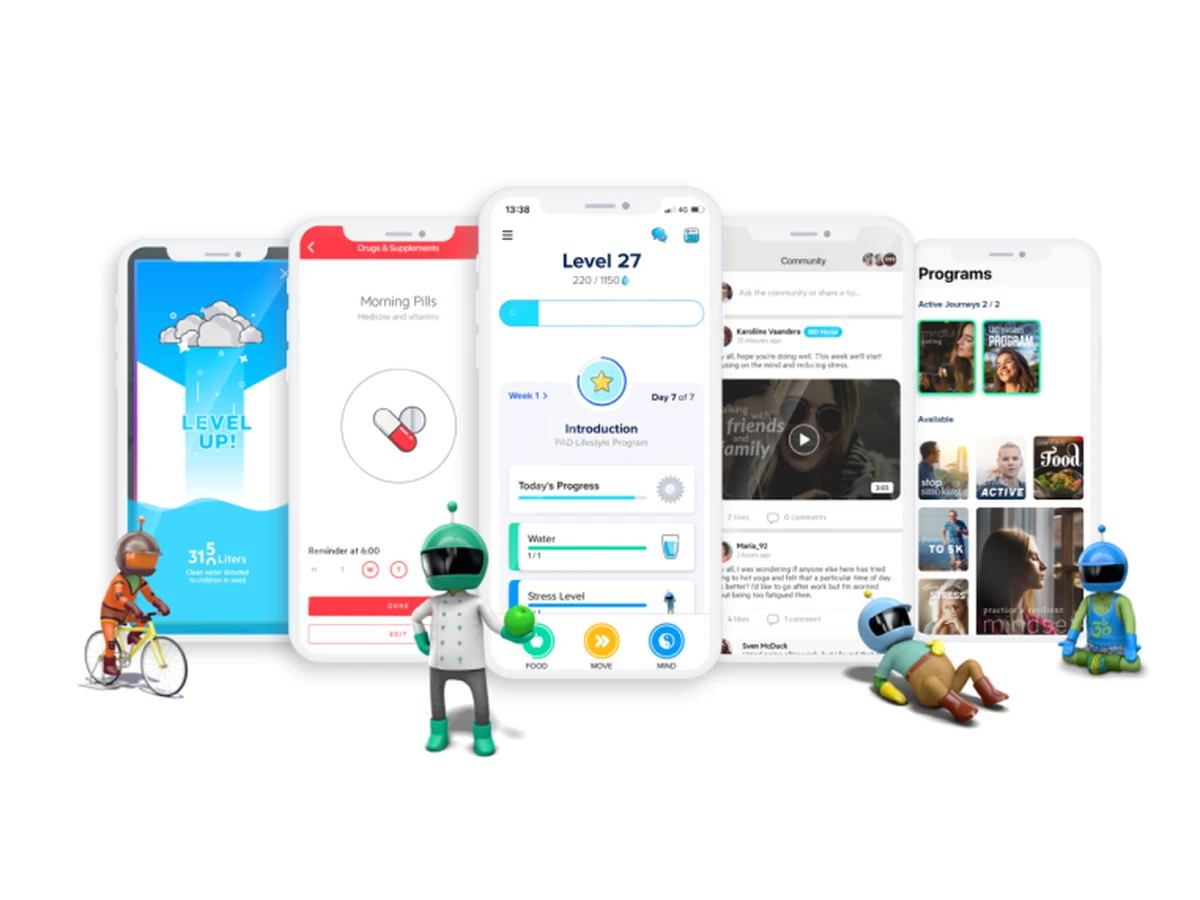
Pfizer Sidekick: a medication adherence app patients kept using
Long-term treatment demands a strict regimen. Pfizer found that functional tools were not giving patients what they needed: relief from anxiety, feedback on how they were doing, and company. We worked with Pfizer to turn a static utility into Sidekick, a virtual health companion.
- The whole person is tracked. Sidekick follows sleep, nutrition and emotional states as well as pills taken, so patients see how adherence affects how they feel.
- Learning comes in short modules. Complex medical information is broken into small steps, and patients become active managers of their own health.
- Patients set their own goals. They design their own meal plans and exercise routines, and people value what they help create.
- Mentors and peers are part of the app. The community makes treatment feel normal and reduces reliance on external clinical support.
- There is something to discover. Unexpected health tips and community success stories keep a routine tool interesting.
Sidekick cut patient dropouts by 30% compared with standard control groups. Users were 3x more likely to hit their health milestones. After six months, 68% were still daily active users, against the typical drop-off curve of mobile health apps.
The project left four lessons:
- Personalization boosts engagement.
- Curiosity turns a routine tool into a motivating one.
- A peer community adds support without adding cost.
- Ownership builds the loyalty chronic care needs.
30%
fewer patient dropouts
3x
more likely to hit health milestones
68%
still daily active users after six months
If you run a patient program, a health app or a wellbeing program and people drop off after the first weeks, contact us and tell us which metric you need to move and which action people need to repeat. We will tell you whether we are the right match. More of our work is in our case studies, and the full range of what we do is on our services page.
Already have a project in mind? Let’s work together!
Our team will listen to your engagement challenges and decide if we are the best match.
Get in touchFrequently Asked Questions
Will a health app designed by Octalysis look like a game?
Usually not. How game-like it looks depends on the target user group and the product, and for serious sectors and older users it rarely looks like a game at all. We take lessons from how games keep people engaged by choice and build them into the experience itself. Sidekick, which we designed with Pfizer, works as a virtual health companion.
Do all patients get the same experience?
No. Patients are motivated in different ways, so we define player types for each client based on how they are motivated. We do not build a different app for each type. We design journeys inside one app that suit the motivations of each player type, so each patient finds a path that fits how they are motivated.
Do you use loss or fear to keep patients on track?
Loss and Avoidance can create urgency, and urgency has a place. We do not punish people. We leverage the threat of a loss and always give people a relatively straightforward way out. For a treatment that lasts years, the weight sits on drives people feel good about, such as setting their own goals and connecting with peers.