
Pfizer Case Study: 30% Improvement in Patient Medication Adherence with Gamified Habit Design
The World’s Leading Behavioral Design for Healthcare Outcomes
Medication non-adherence is a global health crisis. According to the World Health Organization (WHO), poor adherence to long-term therapies compromises treatment effectiveness and is a critical issue for population health (see the WHO Adherence Report).
For pharmaceutical leaders and healthcare providers, the challenge is no longer just about efficacy; it is about engagement. The Octalysis Group, the global authority in gamification and human-focused design, partnered with Pfizer to solve this disconnect.
While standard digital health apps rely on basic functional reminders (Triggers), we applied our proprietary Octalysis Framework to engineer deep habit formation solutions.
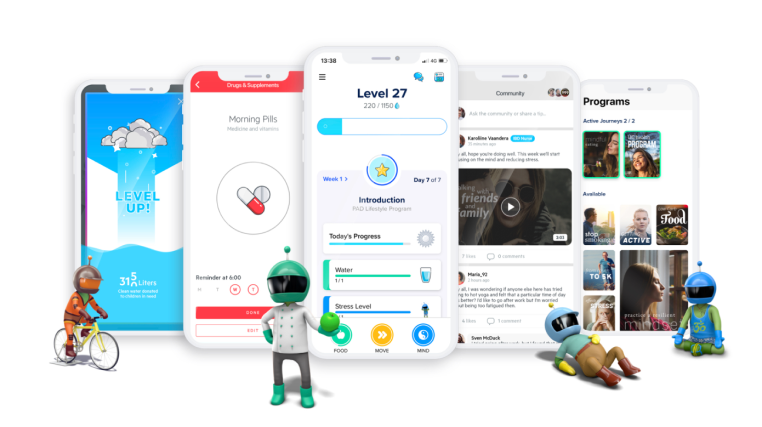
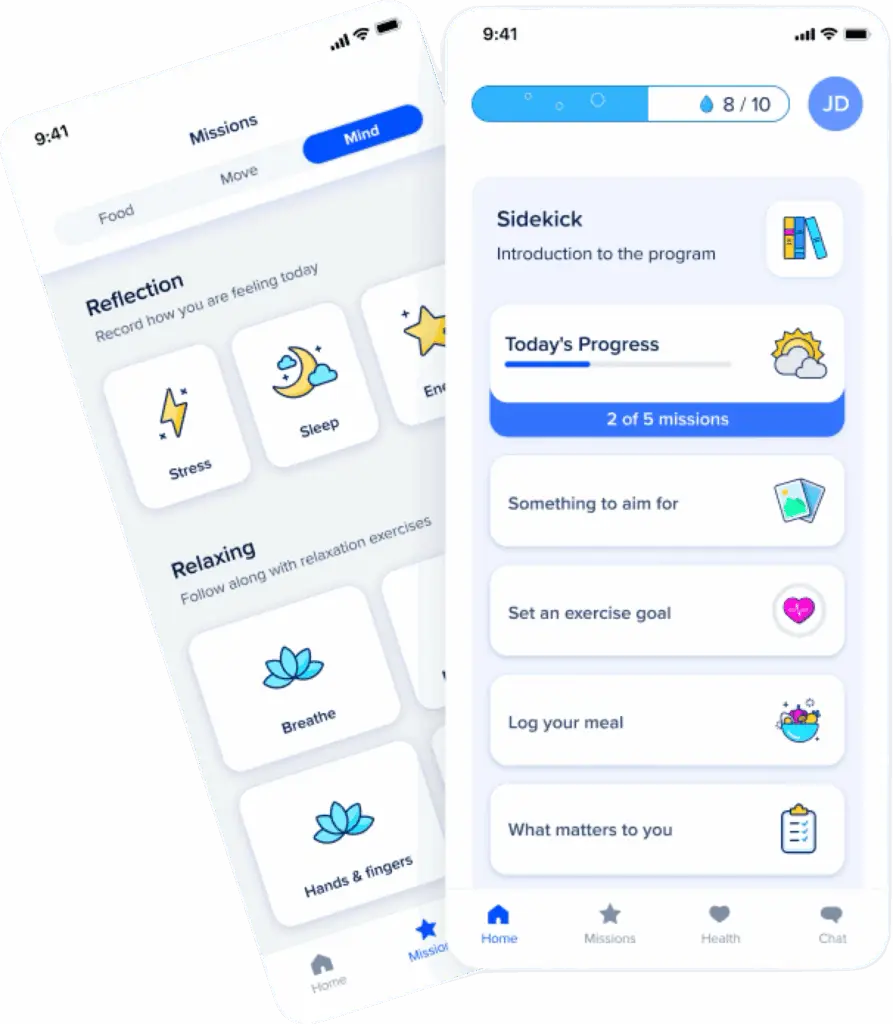
By moving beyond simple notifications to science-backed “Human-Focused Design,” we helped Pfizer transform a static utility into the “Sidekick” app: a virtual health companion that leverages behavioral science to drive unprecedented improvements in patient compliance and well-being.
The Challenge: Bridging the “Adherence Gap” in Chronic Care
Conditions like Ulcerative Colitis (UC) and Crohn’s Disease (CD) demand strict regimen consistency. However, the “Adherence Gap” remains a persistent failure point. Research indicates that non-adherence costs the healthcare system hundreds of billions annually and leads to severe preventable morbidity (Source: NIH Cost Analysis).
Patients frequently discontinue treatment not simply because they forget, but due to a lack of intrinsic motivation, “alert fatigue,” and the emotional burden of managing a chronic illness.
Pfizer identified that functional tools were failing to address the psychological needs of patients. They required a patient adherence solution capable of decoding the user’s behavioral DNA: addressing anxiety, lack of feedback, and isolation.
Empowering Patients in Their Health Journey

The Solution: A Gamified Habit Formation Ecosystem
The Octalysis Group engineered a comprehensive digital therapeutic ecosystem. By integrating behavioral economics with game mechanics, the Sidekick app addresses the three pillars of habit formation: Trigger, Ability, and Motivation.
1. Holistic Health Tracking
Moving beyond pill counting, the app tracks sleep, nutrition, and emotional states. This creates a “feedback loop” where patients visualize how adherence directly impacts their quality of life, leveraging the Health Belief Model to reinforce positive behaviors.
2. Democratizing Medical Data
We transformed complex medical data into accessible, bite-sized learning modules. This Empowerment of Creativity & Feedback gives patients agency, turning them from passive recipients of care into active health managers.
3. Community & Social Proof
Recognizing that isolation leads to dropout, the solution integrates Social Influence & Relatedness. Patients connect with mentors and peers, creating a “Village Effect” that normalizes the treatment experience.
Applied Behavioral Science: The Octalysis Strategy
Our strategy utilized specific Octalysis Core Drive Design to shift user behavior from short-term compliance to long-term habituation, a process supported by research on Making Health Habitual (Gardner et al., NIH).
Core Drive 3: Empowerment of Creativity & Feedback
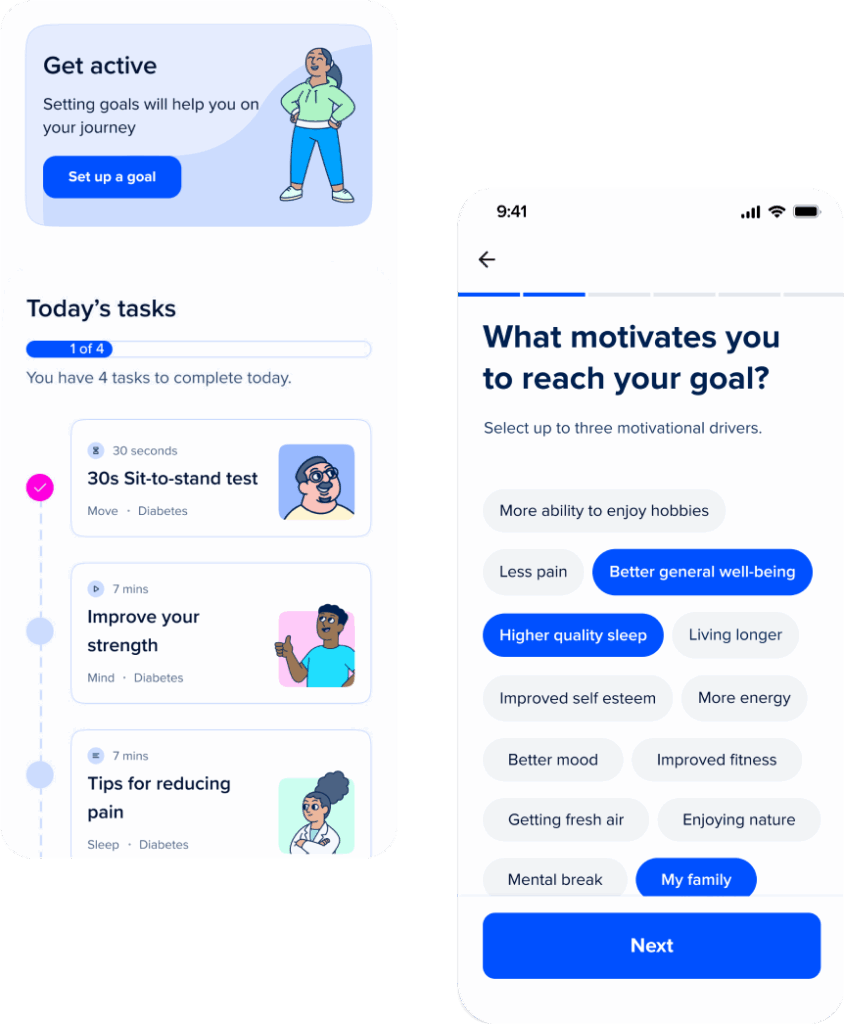
We replaced rigid instructions with customizable goals. Patients design their own “Health Journey” (e.g., customizing meal plans or exercise routines). This agency dynamic also fosters the “IKEA Effect” where users value what they create, which is additionally valuable for long-term habit formation.Core Drive 7: Unpredictability & Curiosity
To prevent the boredom typical of medical apps, Sidekick delivers variable rewards: unexpected health tips, community success stories, and delight features. This utilizes the dopamine loop to maintain high Daily Active Usage (DAU).Core Drive 5: Social Influence & Relatedness
By fostering a self-regulating community, we reduced the reliance on external clinical support. Patients “crowdsource” motivation, creating a sustainable medication adherence solution that scales efficiently.
The Impact: Quantifiable Clinical Outcomes
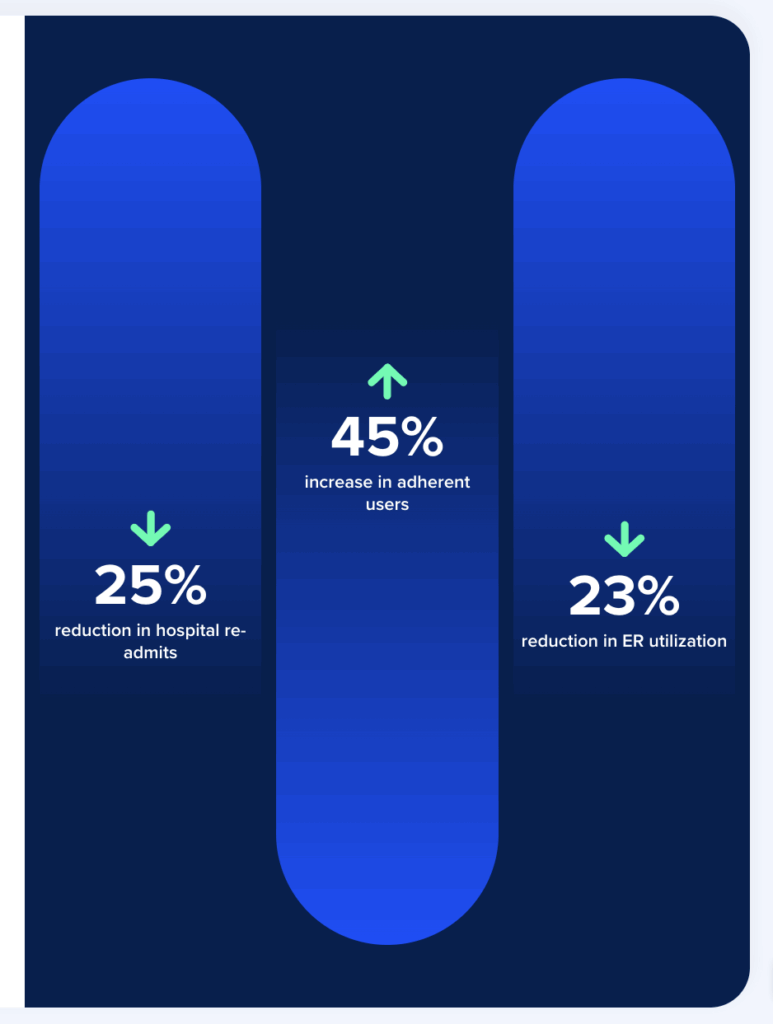
The application of the Octalysis Framework delivered results significantly above industry benchmarks, validating that gamification in healthcare correlates with clinical efficacy (see JMIR Systematic Review on Gamification).
30% Reduction in Dropouts: Validating the efficacy of our habit formation design, retaining significantly more patients on therapy than standard control groups.
3x Goal Achievement: Users were 300% more likely to hit health milestones, proving that behavioral design directly impacts patient outcomes.
68% Long-Term Retention: Over two-thirds of users remained daily active users (DAU) after six months, defying the typical “drop-off curve” seen in mHealth apps.
Lessons learned
The Pfizer case study offers a blueprint for the future of digital health:
Personalization is Key: Leveraging Core Drive 3 to let patients control their journey boosts engagement.
Curiosity Sustains Usage: Integrating Core Drive 7 transforms routine tools into motivating experiences.
Social Anchoring: Core Drive 5 reduces support costs while enhancing peer support.
Ownership Drives Adherence: Empowering users to contribute builds the loyalty necessary for chronic care management.
Internal Resources
Frequently Asked Questions
Q&A about Gamification for Conversion Optimization
A1: Gamification improves medication adherence by targeting intrinsic motivation rather than just external reminders. By using frameworks like Octalysis, healthcare apps can satisfy a patient’s psychological needs for achievement, social connection, and autonomy. This transforms the “chore” of taking medication into a rewarding feedback loop, significantly increasing long-term compliance and habit formation.
A2: Simple reminders rely on “Triggers” but fail if the user lacks motivation. Habit formation solutions, grounded in behavioral science, address the “Motivation” and “Ability” elements of the behavior. They create a neurological association (a habit loop) that makes the health behavior automatic over time, reducing the cognitive load required for patients to stay on track with their treatment.
A3: The Octalysis Group is recognized as a world leader because we look beyond “points and badges.” We apply a human-focused design methodology that has been validated in clinical settings to drive tangible health outcomes. Our work with industry giants like Pfizer demonstrates our ability to turn complex medical protocols into engaging, user-friendly digital experiences that deliver measurable ROI in patient engagement.
Feel free to reach out to us via info@octalysisgroup.com
Ready to solve your Adherence or Engagement Challenge?
Don’t settle for another “notification app.” Build a solution that drives real behavioral change.