What To Learn From Whatnot: The Best Gamified Live Commerce Platform”
 Joris Beerda20 May 2026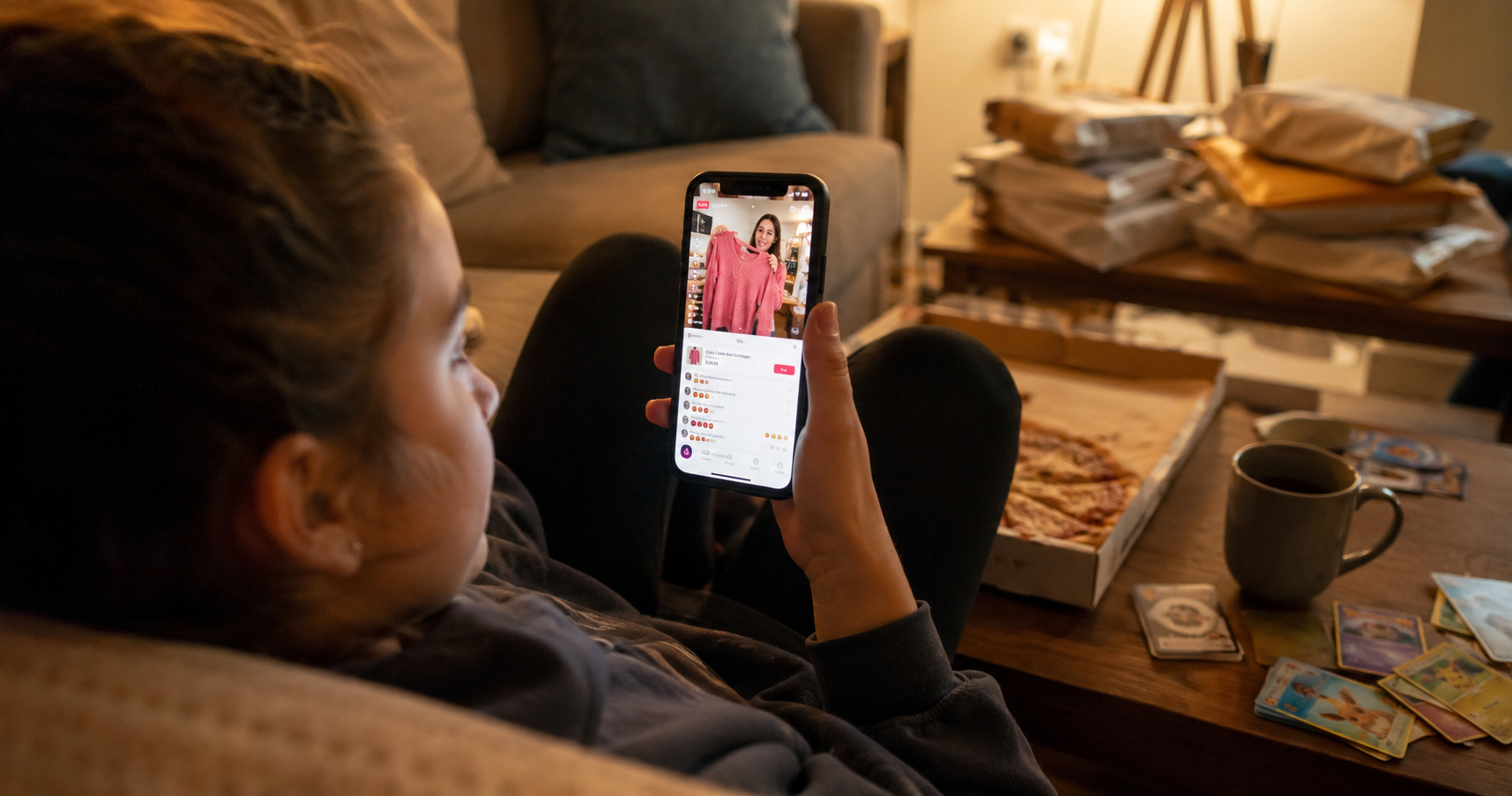
Whatnot did $8 billion in GMV in 2025, more than doubling its $3 billion run rate the year before. According to Sacra’s analysis, the platform crossed $1 billion in revenue. It ranked the number one shopping app in both the US and the UK, and pulled in $100 million of live sales on Black Friday alone. The company’s own reporting puts average daily usage at roughly 95 minutes per day, with month-over-month retention above 80 percent (a figure consistent with eMarketer’s coverage). In late 2025, Whatnot raised $225 million at an $11.5 billion valuation in its Series F. Time Magazine named the company to its 2026 list of most influential companies. Marketplace Pulse called it “an entertainment platform where commerce happens to occur.”
Gamified live commerce is the design pattern where shopping becomes a real-time show: live auctions, host-led streams, chat-driven community, and time-pressured purchase decisions inside an entertainment loop. Whatnot is the clearest Western example of the pattern working at scale, a category that dominated Chinese e-commerce for years through Pinduoduo, Taobao Live, and Douyin, and that Western retail kept dismissing as a cultural artifact.
The dismissal was wrong.
This article explains why Whatnot worked when Amazon Live, NTWRK, and Flip all stalled or shut down, breaks down the platform through the Octalysis Framework, compares it to the Asian apps that pioneered the playbook, and gives product leaders a concrete playbook to apply to their own categories.
Why Other Gamified Live Commerce Attempts Failed
Whatnot is not the first Western company to try gamified live commerce. Three serious attempts came before or alongside it, each with significant capital and brand muscle. All three stalled.
Amazon Live launched in 2019 with the world’s largest e-commerce audience already attached to it. Per Marketplace Pulse’s analysis, it never produced visible breakout usage, and Amazon has rarely highlighted it in investor communications. Amazon Inspire, the company’s short-form shopping feed launched in 2022, was discontinued in February 2025. Amazon had previously tried and canceled Style Code Live, a beauty-focused live show, as early as 2017. Creators describe an 18-month stretch where they abandoned the platform because the ROI never materialized. Amazon Live still exists, but nobody opens the app for it.
NTWRK raised $50 million from Goldman Sachs and Kering in 2021, built a celebrity-host live shopping platform around sneakers, streetwear, and collectibles, and by February 2024 had to acquire Complex from BuzzFeed for $108.6 million (BuzzFeed had paid $294 million for it in 2021) to attach a content engine to its commerce platform. NTWRK was subsequently acquired by Herschel Supply Company. It survived as a brand, not as the category-defining platform its early funding implied.
Flip raised $144 million in April 2024 at a $1.05 billion valuation, positioning itself as TikTok-meets-shopping for beauty and lifestyle. App installs spiked during TikTok’s regulatory uncertainty in early 2024. By August 2025, the site displayed five words: “Flip has shut down.” The company had burned through $236 million in total funding. Creators and brands reported unpaid balances. A federal lawsuit followed.
All three platforms had funding, audience, and market timing. None of them worked. The behavioral design lens explains why.
The Wedge Category Principle
We call this the Wedge Category Principle: Core Drive 4, Ownership & Possession, must be pre-loaded in the user before the platform can activate the other drives effectively. The first category a gamified live commerce platform picks determines its ceiling more than any feature on its roadmap.
Whatnot picked collectibles as its wedge: Pokemon cards, sports cards, Funko Pops, sneakers, comics. These are categories where users already have collections they are emotionally invested in completing. Collectors arrive with sunk emotional and financial costs. They already think in terms of scarcity, provenance, and “the hunt.” When that context meets real-time auctions and community chat, the platform amplifies drives that are already present rather than trying to invent new motivations.
Amazon Live tried to layer live video over a very broad catalog without a single category where users arrive with a strong ownership identity. The default mode is functional shopping, not play. NTWRK leaned on hype drops and collaborations, which created spikes of Scarcity but less continuous Ownership for typical users outside core superfans. Flip subsidized both creators and buyers to drive growth, but heavy reliance on discounts and payouts made the model too expensive to maintain.
Gamified Live Commerce: Platform Comparison
| Platform | Launch | Funding / Valuation | Wedge Category | Core Drives Pre-Loaded | Status (2026) |
|---|---|---|---|---|---|
| Whatnot | 2019 | $11.5B valuation (Oct 2025) | Collectibles (cards, sneakers, Funko) | Ownership & Possession, Social Influence | $8B GMV, 95 min/day, 80%+ retention |
| Amazon Live | 2019 | Amazon’s own capital | Generic (all Amazon categories) | None pre-loaded | Never produced breakout usage; Inspire discontinued |
| NTWRK | 2018 | $50M Series B (Goldman, Kering) | Streetwear drops, celebrity collabs | Scarcity (drops only) | Acquired by Herschel Supply Co. |
| Flip | 2019 | $1.05B valuation (Apr 2024) | Beauty, lifestyle | None pre-loaded | Shut down Aug 2025 |
| Pinduoduo | 2015 | $200B+ valuation | Group-buy grocery, general goods | Social Influence (WeChat sharing) | 900M+ users, dominant in China |
| Taobao Live | 2016 | Alibaba subsidiary | Fashion, beauty, general goods | Social Influence (host-as-celebrity) | $60B+ annual GMV |
The Octalysis Breakdown: Why Whatnot Is So Sticky
A typical 90-minute Whatnot stream layers multiple Core Drives on top of each other, and the compounding is what matters. Counting drives is not the point. A platform could activate all eight drives poorly and produce nothing. What makes Whatnot work is that each drive reinforces the next: Scarcity creates urgency, Unpredictability keeps the user watching through the urgency, Social Influence makes the watching feel like belonging, and Ownership gives the belonging a concrete identity. The sequence matters more than the quantity.
Start with Scarcity & Impatience (Core Drive 6). Auctions often run for 15 seconds or less. The “sudden death” format ends with the last bidder winning. No time to comparison shop, no time to reconsider, no time to leave the stream. Inventory is finite and items disappear in seconds. Most platforms throttle this drive because it creates pressure that hurts trust. Whatnot maxes it out at the second-by-second level of the UX.
Then Unpredictability & Curiosity (Core Drive 7). Whatnot built its early base around “breaks,” group pack openings where buyers purchase a slot and discover together what’s inside. Mystery boxes, surprise sets, rip-till-hit formats where a seller keeps opening packs until a rare card appears. Sports card breaks sell across 30 team slots, with eight winners getting the premium cards and the other 22 walking away with a $5 pack of basics. Users pay for the reveal, not the average value. Variable rewards, slot-machine schedule, dressed up as commerce. (For more on how unpredictability drives engagement, see our LATAM Airlines case study where a Treasure Hunt mechanic produced 123% more miles earned.)
Social Influence & Relatedness (Core Drive 5) holds the whole thing together. Every stream has a live chat. Buyers see other buyers winning. Sellers learn names and reference them mid-show. Mods participate. The community has its own language: breaks, rip and ship, slabs, jumbos. A stream feels like a regular show with regular attendees, not an anonymous transaction.
Development & Accomplishment (Core Drive 2) runs visibly on the seller side. Star ratings, follower counts, 1-day shipping badges. Top sellers display 4.9 stars and over 200,000 reviews. Buyers progress less visibly but still measurably through giveaway entry counts, won-auction history, and the cat-icon “Shop” badge showing items pending shipment. Experienced sellers often showcase their platform journey on-stream, making progression part of the entertainment.
Ownership & Possession (Core Drive 4) is built into the wedge category. Collectibles operate on this drive by definition. Every won item slots into an identity-based ownership pattern the user brought with them. Collections, displays, and on-stream flexing reinforce the difference between casual viewers and serious collectors.
Empowerment of Creativity & Feedback (Core Drive 3) shows up in the bid itself. Even when the choice is binary (swipe to bid or don’t), the user is actively shaping the outcome. Viewers can also suggest breaks, choose which lots to run, or decide when to consolidate shipping, creating a feeling of co-authoring the session.
The interesting one is Loss & Avoidance (Core Drive 8). Most Western product teams refuse to touch it. Whatnot leans in. The swipe-to-bid mechanic has no confirmation step, which means pocket swipes (accidental purchases from an unlocked phone) happen regularly. The community treats them as a known feature, not a bug. Combine no-confirm bidding with 15-second timers and you get a FOMO state where the user buys to avoid the loss of missing out, then has no graceful exit. Missing a rare item happens in front of peers in the live chat, increasing the emotional intensity of each decision.
Where this can backfire: Loss & Avoidance at this intensity creates real consumer risk. Pocket swipes, impulse purchases during high-arousal moments, and the absence of a cool-down period before checkout are the same mechanics that regulators scrutinize in gambling. Whatnot’s growth has been fast enough that these friction points haven’t triggered major backlash yet, but any platform copying this playbook should build in transparent safeguards before scaling. Tight, honest constraint is more sustainable than opaque pressure.
What makes Whatnot different from platforms that activate one or two drives is not the count. Most commerce apps offer some version of Scarcity (limited stock) or Development (loyalty points). Whatnot’s advantage is that the drives compound inside a single continuous experience. The 15-second auction creates Scarcity, the mystery break layered on top adds Unpredictability, the live chat layered on top of that adds Social Influence, and the collector identity underneath all of it provides the Ownership foundation that makes the whole stack emotionally meaningful. Remove any one layer and the experience weakens. Remove Ownership (the wedge) and you get Amazon Live.
How Whatnot Maps to the Four Experience Phases
The Octalysis Framework breaks user engagement into four Experience Phases: Discovery, Onboarding, Scaffolding, and Endgame. A strong gamified live commerce system has to perform across the entire lifecycle, not just inside the stream. Whatnot designed each phase deliberately.
Discovery runs through the App Store and organic spread. In late 2025, analysts reported over 1.6 million installs in a single month. Time Magazine’s inclusion on its 2026 influential companies list further validated the platform for mainstream buyers and sellers. Discovery also flows organically from the content itself as clips, highlights, and community stories spread on other platforms.
Onboarding is the most polished part of the product. A first-time user opens the app and gets dropped into a curated stream. The “Tap on a show to start shopping” overlay walks them through their first watch. A confetti welcome creates a celebration moment before any purchase. The “Swipe to Bid or Buy” tutorial includes a practice bid that won’t be charged. Buyer Protection appears as a yellow shield. The wallet, payment setup, and “You’re All Set” gift moment all complete inside the first stream, not in a separate settings flow. Onboarding accomplishes two jobs at once: teach core mechanics and deliver an immediate win. (Compare this to Porsche’s gamified onboarding in our Porsche case study, where a similar first-day celebration approach drove 90% Daily Active Users.)
Scaffolding is where Whatnot becomes a habit. Sellers run recurring shows with consistent time slots and formats, so returning users know what to expect. Giveaway entries compound: enter at five minutes, return at ten, return again at twenty. Community rituals like regular shout-outs and inside jokes create continuity between sessions. The platform’s 80%+ month-over-month retention is the scaffolding phase doing its job. Gamified live commerce that fails at this phase sees sharp engagement decay once the novelty of first sessions wears off.
Endgame is where most platforms fail, and where Whatnot’s flywheel turns. Over 500 sellers have achieved $1M+ in annualized sales, and 1 in 8 sellers are now full-time, up 20% year over year. As sellers professionalize, they invest in set design, show formats, and communities, making their channels closer to small media brands than occasional side gigs. Top buyers become sellers. This endgame layer converts individual live streams into a sustainable ecosystem. Twitch built the same pattern with streamers. YouTube with creators. Whatnot with hosts.
What Whatnot Borrowed From Asia (And What It Added)
Whatnot’s success sits in a global context where China has already proven and iterated on live commerce at massive scale.
Pinduoduo, founded in 2015, hit a $200 billion valuation in under six years using group buying: users assemble teams to unlock lower prices, blending social interaction, gamification, and discounts. About 65% of transactions flow through its WeChat mini-program, where social sharing is built into the purchase journey itself. The result: a platform that doesn’t buy users, because users recruit each other for discounts.
Taobao Live and Douyin (TikTok’s Chinese sibling) layered live streaming onto e-commerce starting around 2016-2017. Hosts function as celebrities with specific playbooks: SKU stacking, time-boxed promotions, and KOL-led product education. By 2020, livestream shopping was a normalized part of Chinese retail. Top hosts sold tens of millions of dollars in single streams.
Whatnot diverges in three ways. The wedge category was collectibles rather than general consumer goods, anchoring on a niche where emotional Ownership is unusually strong. The core loops rely on real-time price discovery, suspense, and randomness more than fixed-price listings and coupons. And the infrastructure was designed for many small sellers to run shows, spreading risk and creating long-tail content rather than concentrating power with a small set of celebrity hosts.
For Western companies, copying Asian formats superficially will not work. The wedge, host model, and motivational design must be tuned to local behavior and category culture.
A necessary caveat: live commerce, even at Whatnot’s scale, remains a small fraction of total retail e-commerce. The format requires time investment most shoppers won’t give. For categories where community, expertise, or identity matters, it wins. For commodity purchases, search-based shopping will remain dominant.
What Product Leaders Should Take From This
Four lessons for anyone designing commerce or engagement platforms in 2026.
Retention first, conversion second. Whatnot does not try to move users from open-app to checkout in three clicks. The goal is 95 minutes a day. Inside those 95 minutes, conversion happens naturally because the user is in a high-arousal state for the entire session. Whatnot’s 25-30% conversion rate during streams, versus single-digit conversion in traditional e-commerce, shows what happens when you optimize for time-on-platform instead of funnel speed. Design sessions to be rewarding even for non-buyers through giveaways, chat status, or influence over the show.
Use Scarcity and Loss & Avoidance thoughtfully. Time-boxed auctions, limited inventory, and “once per stream” events create healthy urgency when transparently communicated. Designs that push users into regret through confusing mechanics or deceptive scarcity will backfire under regulatory and reputational scrutiny. Tight, honest constraint is more sustainable than opaque pressure.
Your wedge category determines your ceiling. Amazon Live failed because generic retail doesn’t pre-load Ownership & Possession. Flip failed because subsidizing growth without identity-based motivation makes metrics fragile when funding sentiment shifts. Whatnot succeeded because collectibles come with built-in emotional investment, community language, and identity stakes. Once the wedge is proven, expansion can follow into adjacent categories that share similar motivational profiles. Whatnot’s Beauty category grew 791% year over year in 2025. Electronics grew 444%. The categories where live commerce works are wider than collectibles enthusiasts predicted, and narrower than universal retail.
Build for micro-creators, not just stars. A resilient live commerce ecosystem depends on thousands of small and mid-sized hosts, not a few large creators. Provide simple tooling so new hosts can run professional-feeling shows with minimal setup. Structure incentives so that consistent mid-tier performance gets rewarded, not only blockbuster drops. This approach spreads risk, nourishes niche communities, and creates more surface area for Discovery.
We have worked with platforms across loyalty, conversion, and engagement design for over a decade, and Whatnot is the cleanest current example of these principles producing a category winner.
Apply This to Your Product
Whatnot did not win by adding more features. It won by picking the right category, designing the right motivational stack, and building each Experience Phase to feed the next one. Most commerce platforms skip at least two of those three. If even one section of this breakdown made you rethink how your own product handles retention, onboarding, or monetization, that’s where the real work starts. We can help you map your product to the Octalysis Framework, identify which Core Drives are compounding and which are missing, and design the Experience Phases that turn first-time users into daily ones.
We have helped over 175 companies design engagement systems that work. Browse our case studies to see how and contact us to start the conversation.