
- Home
- Case Studies
- Procter & Gamble
Case study · Fast Moving Consumer Goods
Procter & Gamble Case Study: 28% Revenue Growth with Sales Gamification
- Client
- Navo Orbico (P&G distributor)
- Markets
- 19 countries
- Industry
- Fast Moving Consumer Goods
- Core Drives
- 1357
Transforming “Sales Reps” into “Trading Captains”
Employee disengagement is a silent profit killer. With Gallup reporting that unmotivated employees cost the global economy $8.8 trillion annually,
Procter & Gamble distributor Navo Orbico faced a critical tipping point: rising turnover and stagnant sales across massive brands like Ariel and Pampers.
Recognizing that traditional “carrot-and-stick” incentives had failed, they partnered with The Octalysis Group, the global authority in Human-Focused Design, to engineer a structural revolution.
By applying the Octalysis Framework, we transformed their routine sales operations into an immersive, narrative-driven ecosystem, leveraging Intrinsic Motivation to reverse the decline and drive a verifiable 28.6% revenue increase.
The Challenge
The Challenge: The Failure of Traditional Incentives
Navo Orbico is a major FMCG distributor in Europe with about 5,500 employees, and its sales teams sell Procter & Gamble products to retailers. Navo Orbico operates in 19 countries with a massive portfolio. Unfortunately, their sales teams were suffering from “Incentive Fatigue.” Cash bonuses were no longer driving incremental effort.
The core issues were:
- Low Engagement Work: Routine administrative tasks (CRM entry, stock checks) were neglected.
- Training Apathy: Expensive training programs had low completion rates.
- Isolation: Field reps felt disconnected from headquarters and each other.
They needed a Sales Enablement Solution that addressed the emotional drivers of performance, not just the financial ones.
Sales engagement with outstanding KPI results
The Octalysis Group Sales Engagement Projects increase your sales revenue numbers with 25% or more
Discover true engagement with Octalysis employee design!
The Solution
The Solution: An Immersive Corporate Metaverse
We rejected the standard “points and badges” approach. Instead, we built a comprehensive gamification experience over their existing CRM systems, together with our Polish Octalysis licensee Funtiago. We followed our 5-step Octalysis process: Strategy Dashboard, Feature Brainstorm, PE Feature List, Battle Plan and Concept Wireframes.

Results
The Impact: Measurable Business ROI
The results validated the power of Behavioral Science in Business. The project was not just “fun”; it was a high-efficiency revenue engine.
+28.6%
Increase in revenue
60%
Increase in sales activities
99.5%
Voluntary participation
- +28.6% Revenue Increase: The direct correlation between the gamified intervention and sales volume was unmistakable.
- +60% KPI Improvement: Critical behaviors (like up-selling and accurate reporting) improved drastically.
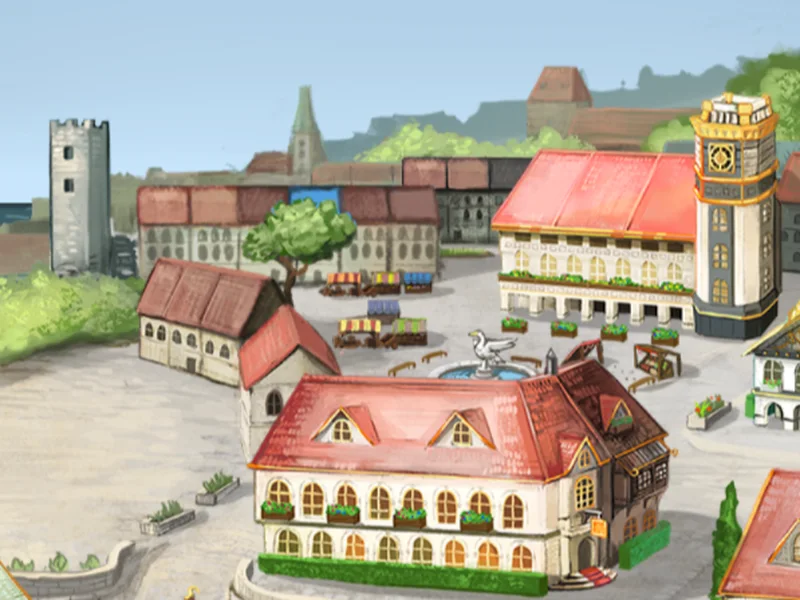
- +300% Social Interaction: The “Port City” mechanic shattered silos, creating a connected workforce that shared best practices organically.
- 99.5% Adoption Rate: In a non-mandatory rollout, nearly every eligible employee voluntarily joined the platform: a statistic unheard of in corporate software.
Recognition: The project was awarded “Best Gamification Project”

Lessons for Enterprise Leaders
- Context is King: Don’t just add points to a CRM. Wrap the work in a narrative that gives it meaning (Core Drive 1).
- Collaboration over Competition: Pure leaderboards only motivate the top 10%. Collaborative goals (saving the city) motivate 100% of the workforce.
- Intrinsic Rewards: The most powerful motivators were status, strategy, and social connection—not just the end-of-year bonus.
More design details
- Sailing to clients: navigation was integrated with Google Maps, so reps saw themselves sailing to their clients. The more activities a rep did, the bigger and faster their ship became, and the faster they got feedback from headquarters.
- A gentle leaderboard: it showed only a few people above and below each rep. Full leaderboards motivate only the top few; this kept the competition within reach for everyone.
- The tavern: a place to socialize, where management shared guidance and news.
- Surprises: secret codes that opened mystery boxes, and a Captain’s Wheel of Fortune where reps spent trade energy on prizes, a feature people used daily (Core Drive 7: Unpredictability & Curiosity).
The original 2017 write-up of this project: How Octalysis design supercharges your sales team. Related: How to design leaderboards that motivate everyone, our Employee Engagement services, the CAIXA sales gamification case study, and all projects by business problem in Gamification Examples.
Internal Resources
Frequently Asked Questions
Q&A about sales force gamification
How did gamification increase sales at Procter & Gamble’s distributor Navo Orbico?
We turned the daily sales work into a game built over Navo Orbico’s existing CRM. Sales reps became captains of trading ships, and routine tasks such as CRM entries and stock checks moved their ship forward. Revenue rose 28.6% against historical performance, and the program is now in its fifth year.
Why did Navo Orbico choose a game over higher cash bonuses?
Cash bonuses were no longer driving extra effort. CRM entries and stock checks were neglected, training had low completion rates, and field reps felt disconnected from headquarters and from each other. The game addressed those problems directly: a shared mission, choices about how to grow, and a team goal everyone could see.
How did the design get sales reps to work together?
Every rep belonged to a virtual “Port City.” If the team missed its collective sales targets, the city was hit by “natural disasters,” so strong performers had a reason to help colleagues who were behind. Social interaction rose 300%, and 99.5% of eligible employees joined although taking part was not mandatory.
Ready to Ignite Your Sales Force?
Stop relying on burnout-inducing quotas. Build a system that fuels itself.