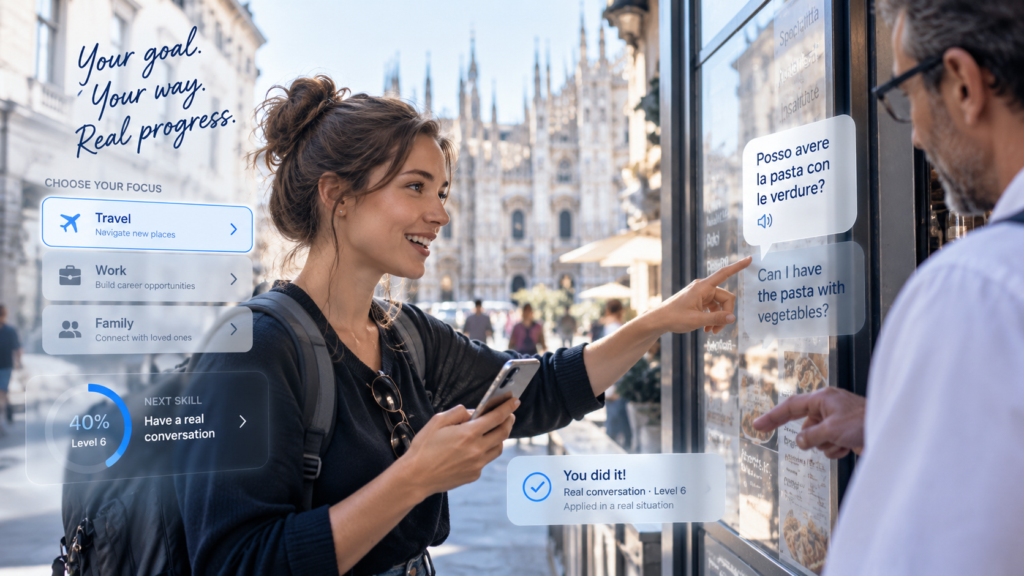
Product design gamification bridges the gap between game designers who have spent decades perfecting voluntary engagement and product designers still struggling with onboarding completion. This gap represents one of the largest untapped opportunities in technology.
Here is a number that should make every product designer uncomfortable: the average mobile game retains 25 percent of users after day one, while the average non-game app retains just 11 percent. Both are competing for the same human attention. Both exist on the same devices. Both face the same distraction-saturated environment. But games consistently outperform other categories at creating experiences people voluntarily return to, often spending thousands of hours and significant money for the privilege.
This is not because games are trivial and products are serious. It is because game designers have developed a sophisticated, research-backed understanding of human motivation that most product designers have never been exposed to. The game industry has invested decades and billions of dollars into answering one question: how do you create an experience that people choose to engage with when they do not have to? The answers to that question translate directly to every product category: if you understand the underlying psychology rather than copying surface-level mechanics.
Lesson One: Onboarding Is the Tutorial, and Most Tutorials Are Terrible
The greatest game designers of the last two decades have converged on a single principle for teaching players how to play: never separate learning from doing. Nintendo’s Shigeru Miyamoto, designer of Super Mario Bros., famously designed World 1-1 so that the first screen teaches jumping, the second screen teaches enemies, and the third screen combines both: all without a single line of instructional text. The player learns by playing. The tutorial is the game.
Now consider how most products handle onboarding. A modal dialog explains features. A guided tour points at interface elements. A series of tooltip popups describe what buttons do. The user must complete “learning” before they can start “doing.” This separation is the fundamental design error that game designers eliminated decades ago.
Research from Nielsen Norman Group on product onboarding confirms what game designers have long known: users skip tutorials, ignore walkthroughs, and dismiss modals without reading them at rates exceeding 90 percent. Not because users are lazy: because the human brain is wired to learn through action, not instruction. Appcues research on onboarding effectiveness shows that interactive, task-based onboarding achieves 3.5 times higher completion rates than instructional walkthroughs.
Through the Octalysis Framework, this is a Core Drive 3: Empowerment of Creativity & Feedback problem. Instructional onboarding tells users what to do. Game-inspired onboarding gives users meaningful tasks that teach through experience. The difference in engagement is not incremental: it is categorical.
Lesson Two: Accomplishment Must Be Earned, Not Awarded
Game designers understand something that most product designers miss: the feeling of accomplishment comes from overcoming genuine challenge, not from receiving participation trophies. GDC (Game Developers Conference) talks have extensively documented how the dopaminergic reward response in the human brain activates most strongly when a challenge is difficult enough to require real effort but achievable enough to avoid frustration.
This is why From Software’s Elden Ring sold over 25 million copies despite: or rather, because of: its notorious difficulty. Players do not enjoy the game despite the challenge. They enjoy it because the challenge makes accomplishment meaningful. The same psychological mechanism explains why Duolingo’s streak system works: it represents actual consistent effort toward a real skill. The accomplishment is genuine, not manufactured.
Most products get this wrong in one of two ways. Some make everything too easy, awarding badges and celebrations for trivial actions. “Congratulations! You completed your profile!” This triggers what psychologists call the overjustification effect: when external rewards are disproportionate to effort, they actually reduce intrinsic motivation. Research published in the Journal of Personality and Social Psychology has replicated this finding across dozens of contexts.
Other products make the opposite error: they provide no feedback on genuine progress. Users improve their skills, develop workflows, and become more efficient: but the product never acknowledges or visualizes this growth. In the Octalysis Framework, this is a Core Drive 2: Development & Accomplishment failure. The accomplishment exists, but the experience does not surface it.
The game design lesson: design for genuine user capability development. Create challenges that require real effort. Make progress visible and meaningful. Celebrate actual achievement, not mere activity.
Lesson Three: Meaningful Choice Is the Engine of Engagement
The best games give players agency: multiple paths to goals, meaningful decisions with real consequences, and the sense that you are authoring your own experience. The Elder Scrolls series, Civilization, and even card games like Slay the Spire demonstrate that when players feel genuine ownership over their decisions, engagement deepens dramatically.
Most products prescribe a single path. Complete step one, then step two, then step three. There is no choice, no agency, no sense that the user’s preferences and judgment matter. Harvard Business Review research on customer engagement demonstrates that perceived choice: even when options lead to similar outcomes: increases engagement duration by 40 percent and satisfaction by 27 percent. The mechanism is Core Drive 3 again: when users feel empowered to shape their own experience, they invest more deeply in it.
Game designers have also learned that meaningful choice is not the same as unlimited choice. The paradox of choice, documented by psychologist Barry Schwartz at Swarthmore College, shows that too many options produce paralysis rather than empowerment. Great games present meaningful options at each decision point: enough for genuine agency, few enough for decisive action. Product designers who implement “customization” by offering hundreds of settings miss this lesson entirely.
Lesson Four: Progress Must Be Visible and Specific
Games make progress tangible. Experience bars, skill trees, map completion percentages, achievement lists: players can always see exactly how far they have come and what lies ahead. The path forward is clear even when it is challenging. This visibility serves a profound psychological function: it transforms abstract effort into concrete advancement.
Most products hide progress. Users cannot see how their skills have developed, how their usage has evolved, or how close they are to mastering advanced capabilities. There is no map of the territory, no sense of how much they have explored, no visualization of growth over time.
Gartner research on enterprise software adoption found that products with visible progress indicators achieve 45 percent higher feature adoption rates than those without. The reason connects directly to Core Drive 2 in the Octalysis Framework: humans are motivated by evidence of their own growth. When that evidence is invisible, the motivation it would generate is simply lost.
The game design lesson is not to add progress bars to everything: that is the surface-level gamification that gives the discipline a bad reputation. The lesson is to identify where genuine user growth is occurring and make it visible. If your users are becoming more efficient, show them. If they are developing mastery of advanced features, acknowledge it. If their outcomes are improving over time, visualize the trajectory.
Lesson Five: Social Systems Must Create Collaboration, Not Just Competition
Early gamification efforts focused almost exclusively on leaderboards: ranking users against each other in zero-sum competition. This approach borrowed the most superficial element of game design while ignoring the deeper principle. Research from the International Simulation and Gaming Association demonstrates that collaborative game mechanics generate stronger long-term engagement than competitive mechanics across virtually every context studied.
The most engaging games create social systems where players help each other succeed. World of Warcraft’s enduring appeal comes not from competition but from guild cooperation: shared goals that require complementary skills. Among Us succeeded because it created a framework for social deduction that strengthened friendships rather than ranking them. Even competitive games like League of Legends derive most of their engagement from team coordination, not individual ranking.
For product designers, the lesson is to build social features around Core Drive 5: Social Influence & Relatedness in its collaborative form. Shared workspaces where teams can see each other’s contributions. Mentorship features where experienced users help newcomers. Community spaces where users share workflows and solutions. McKinsey research on digital collaboration shows that products with collaborative social features achieve 2.4 times higher daily active usage than those with competitive-only social mechanics.
Beyond Surface Product Design Gamification
The fundamental mistake most organizations make when trying to apply game design principles is copying mechanics rather than understanding psychology. Adding points, badges, and leaderboards to a product is not game design. It is decoration. And decoration without structural change produces the engagement equivalent of a sugar rush: a brief spike followed by rapid decline and eventual resentment.
The Octalysis Group works with product teams to apply the deeper lessons of game design: the motivational architecture that makes games work, not the surface mechanics that make them look like games. This means redesigning onboarding as experiential learning rather than instructional sequences. It means building genuine accomplishment systems that recognize real user growth. It means creating meaningful choice architectures that give users agency without overwhelming them. And it means developing social systems that make collaboration intrinsically rewarding.
The game industry has spent billions of dollars and decades of iteration discovering what makes human beings voluntarily engage with experiences. Product designers who ignore this accumulated knowledge are choosing to solve engagement problems from scratch when proven solutions already exist.
If your product struggles with engagement, retention, or adoption, the game design discipline has answers that your current approach probably does not contact us about applying genuine game design psychology: not surface gamification: to transform how users experience your product.