
- Home
- Case Studies
- BitDegree
Case study · Education and technology
BitDegree Case Study: 400% More Course Completions with Gamified Learning
- Client
- BitDegree
- Product
- Online courses (MOOC)
- Industry
- Education and technology
- Core Drives
- 3467
Why most online courses are never finished
Have you ever learned something online? Millions of people have enrolled in Massive Open Online Courses (MOOCs). Unfortunately, only 10–15% of all users see their courses through to completion. Most MOOC design is linear: it relies on the instructor’s knowledge and assumes a motivated learner, so it feels more like work than learning.
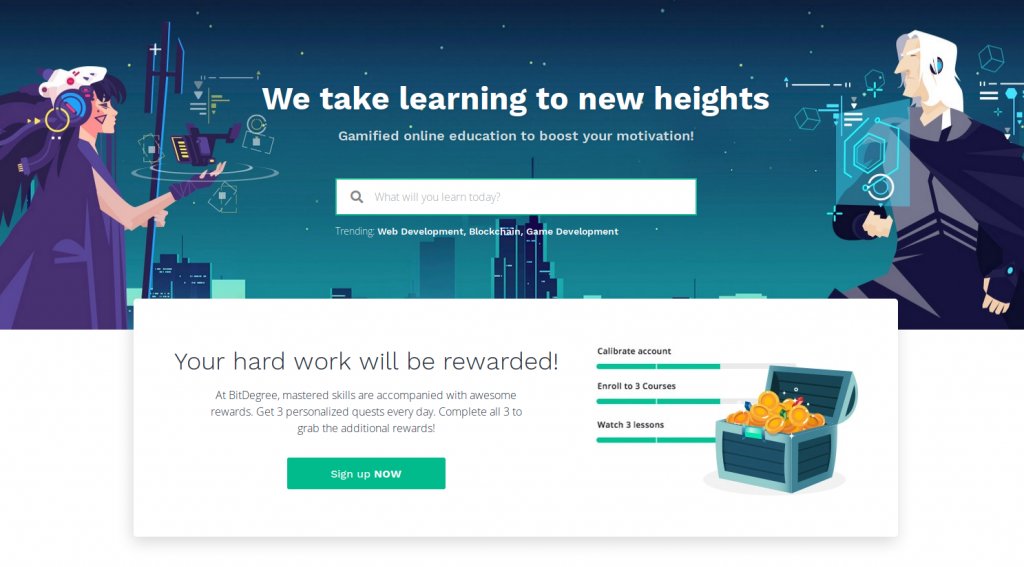
BitDegree is the world’s first blockchain-powered MOOC platform. It rewards learners with cryptocurrency for completing courses, a “learn to earn” model that makes skills training free and accessible. BitDegree asked The Octalysis Group to turn that model into high engagement and higher course completions.
How we worked
A 3-month design sprint across the whole learner journey
In a 3-month design sprint, we applied the Octalysis Framework to BitDegree’s whole learner journey. We started with a needs assessment: the gap between BitDegree’s mission, the strategy it used to reach it, and what was actually happening on the platform.
BitDegree’s strategy rested on three initiatives:
- a social, collaborative learning platform;
- a decentralized education marketplace on the blockchain;
- gamification to raise engagement.

The Challenge
What was holding completions back
The Solution
What we designed
More techniques for online courses: Pro Tips to Supercharge Online Learning. How crypto rewards motivate learners: 5 Tips to Make Crypto less Cryptic.
Results
How we measured it
We compared two groups. Group 1 began with the gamified onboarding path. Group 2, the control group, went straight to the course list, as on the old platform.
Group 1 completed courses 2–3 times faster, and 3–4 times as many users in Group 1 finished courses. These results came while only about 20% of the design had been implemented.
400%
Increase in Course Completions
400%
Increase in returning users and users taking multiple courses
300%
Increase in time spent on the platform
Frequently Asked Questions
Q&A about gamification for online learning
How did gamification increase course completions on BitDegree?
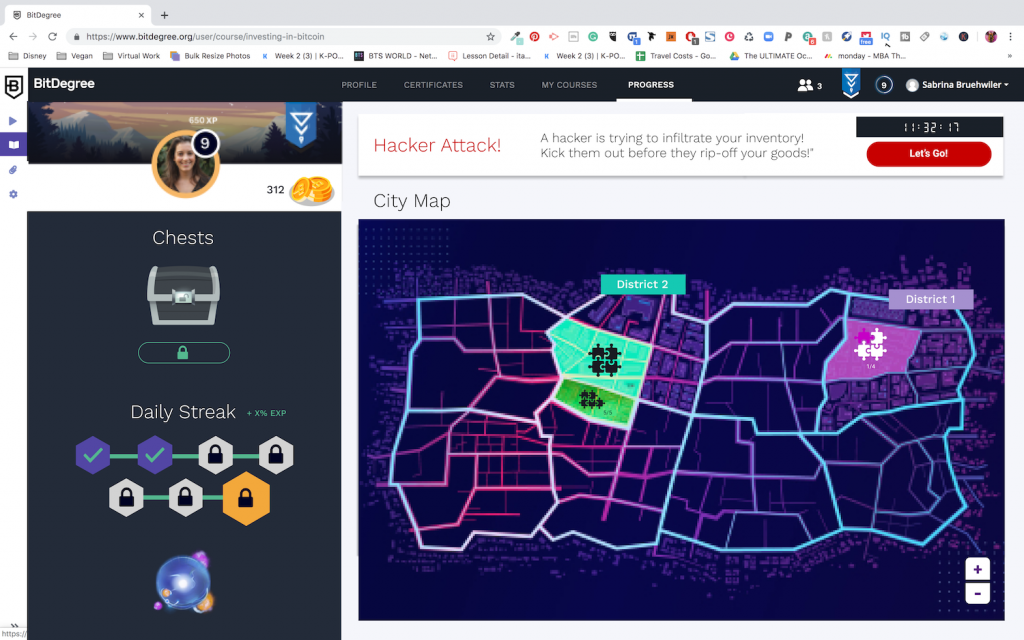
We gave every course a gamified learning path with clear objectives, exercises and assessments, and rewarded completion with cryptocurrency or certificates. Course completions increased by 400%.
How was the result measured?
We compared two groups. Group 1 started with the gamified onboarding path. Group 2, the control group, went straight to the course list. Group 1 completed courses 2–3 times faster, and 3–4 times as many users finished courses.
Why do online courses need gamification?
Only 10–15% of MOOC users finish their courses. Most course design is linear and feels like work. Gamification gives each step a clear purpose and reward, so learners keep going.
Read more
- The full story behind the design: Gamification Design: A BitDegree Case Study
- Our Learning & Development services
- Another online learning case: Microsoft Learn case study
Unlock Your Business True Potential
Stop leaving revenue on the table. Apply the science of Human-Focused Design to your platform.